Norwegian Scenic Routes: The 18 Official Drives Ranked
Norway has 18 officially designated scenic routes totalling over 2,000 km of some of the most dramatic asphalt on Earth. We’ve driven them all — or driven to the ones we haven’t yet obsessed about for years from our home in Rovaniemi. Here’s our honest ranking.
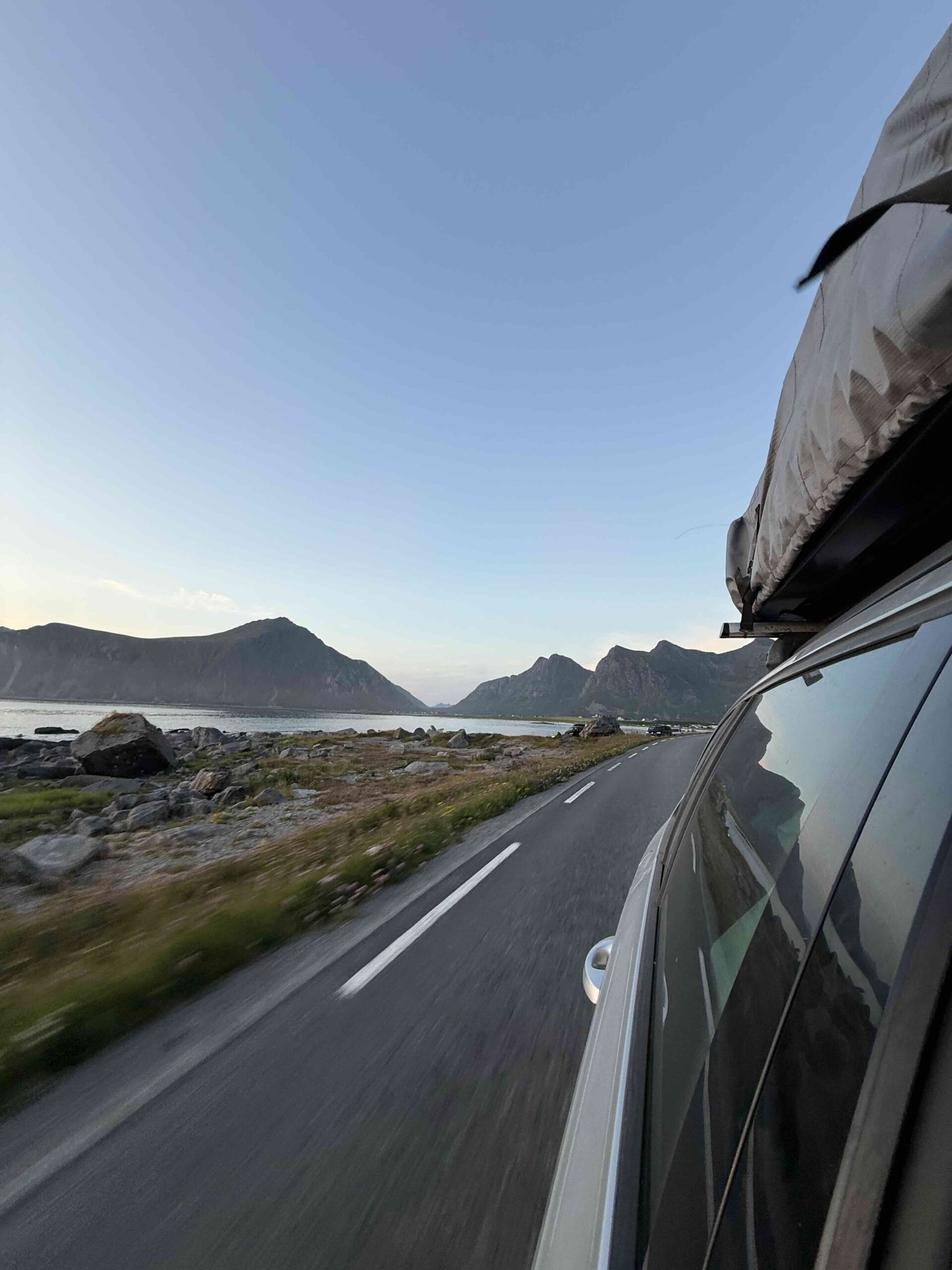
Norway routes have been on our radar ever since we drove to Geiranger from Rovaniemi on a five-day road trip a few summers back. The country has a genuinely official programme — 18 Nasjonale Turistveger (National Tourist Routes) — each one curated with rest stops, sculptures, and viewing platforms that would be remarkable in any other country. In Norway they’re just Tuesday.
This is not a list of drives someone found on Instagram. These are Norway scenic routes we’ve driven, researched obsessively, or plan next. We’re ranking them on three axes: drama of the landscape, ease of access from abroad (relevant when you’re flying in from Helsinki or another European hub), and how well they reward a first-time Norway visitor versus requiring a specific niche interest.
Norway’s 18 official scenic routes are collectively called the Nasjonale Turistveger. The single most dramatic is Geiranger–Trollstigen, but the most accessible crowd-pleaser is Hardanger. For midnight-sun drama with fewer cars, head to Andøya or Senja in the far north. Allow at least 3–5 days to do justice to any two routes properly.
What are Norway’s official scenic routes?
Norway’s government has officially designated 18 stretches of road as Nasjonale Turistveger — National Tourist Routes. The programme has been running since the 1990s and is managed by the Norwegian Public Roads Administration, which commissions architects and artists to install rest stops, viewing platforms, and installations at carefully chosen spots along each route.
The basics you need to know
- Total length: roughly 2,100 km across 18 routes, spread from the southwest coast to the far north above Tromsø.
- Season: most routes are fully driveable June to September. Some mountain passes (Trollstigen, Aurlandsfjellet “Sognefjellet”) close in winter.
- Cost: the roads themselves are free, but some individual installations, ferries, and toll roads on or near routes carry small fees. Bring a card — Norway is essentially cashless.
- Road quality: all 18 are paved, maintained, and driveable in a standard rental car. Some sections are narrow; an automatic small SUV is the sweet spot.
- The best one: every Norwegian will argue about this. Our answer is further down.
Why they’re different from regular scenic roads
What sets the Nasjonale Turistveger apart is intentional design. The rest stops aren’t afterthoughts — they include award-winning architecture like Reiulf Ramstad’s Trollstigen visitor centre, which looks like it grew out of the rock, and Glenn Murcutt’s Austvågøy rest area in Lofoten. You pull over and find something actually worth getting out of the car for, not just a layby with a bin.
The top 5 Norway scenic routes for first-timers
If this is your first time driving Norway, the 18 routes can feel overwhelming. Here are the five we’d recommend to any first-time visitor — in order of drama-to-effort ratio.
1. Geiranger–Trollstigen (our top pick)
This is the one. The route links the UNESCO-listed Geirangerfjord with Trollstigen (“the Troll’s Path”), a 9% gradient road with 11 hairpin bends climbing 850 metres through waterfalls. We drove this from the Valldal side on a late-June morning with the valley still in mist and it is, genuinely, one of the most memorable drives we’ve ever done. Allow a full day and don’t rush the Trollstigen visitor centre.
2. Hardanger
Running along the Hardangerfjord from just east of Bergen to the high plateau, this is the most photogenic route in spring (apple blossom, April–May) and arguably the most comfortable to drive year-round. Ferry crossings are woven into the route, and the Vøringsfossen waterfall viewpoint is one of those places that actually exceeds expectations. Pairs perfectly with a Bergen city stop.
3. Senja
Norway’s second-largest island, often called “Norway in miniature” because the landscapes shift so fast. We drove Senja in early July and the midnight sun gave the mountains above Husøy a light that photographers follow across the world for. Much less crowded than Lofoten now, though that’s changing quickly.
4. Helgelandskysten
The coastal route through Helgeland is defined by the Svartisen glacier, the “seven sisters” mountain range visible from the ferry crossing, and a string of small fishing villages that feel untouched. The Kystriksveien (RV17) section here is one of the ferry-hopping highlights of the entire Norwegian coast.
5. Rondane
Norway’s first national park, accessible via a route that cuts through high mountain plateau. Less dramatic than the fjord routes, but excellent for anyone wanting to hike and drive in combination. Reindeer sightings are almost guaranteed in summer, and the light on the fells in the long June evenings is extraordinary.
Related read Before you drive Norway, read our guide on whether renting a car in Norway is worth it — and what we wish we’d known about toll roads, ferry bookings, and narrow mountain passes.
All 18 Norway scenic routes — ranked
Here’s the complete list in our ranked order. We’re scoring on visual drama (10 = life-changing), first-timer appeal (how easy to love on a first Norway trip), and a brief honest note on each.
- Geiranger–Trollstigen — Drama: 10/10. First-timer appeal: 10/10. The non-negotiable. If you only drive one route, this is it.
- Hardanger — Drama: 9/10. First-timer: 10/10. More accessible than Geiranger, ferry-laced, photogenic every month May–September.
- Senja — Drama: 9/10. First-timer: 8/10. Midnight-sun photography at its peak. Still under the radar compared to Lofoten.
- Lofoten — Drama: 9/10. First-timer: 8/10. Technically E10 rather than a classic Turistveg, but the official Lofotvegen segment makes the list. Crowds are real in July — go in late June or August.
- Ryfylke — Drama: 8/10. First-timer: 7/10. Deep fjords in the southwest, access to Preikestolen (Pulpit Rock) ferry side-trip. Less known than Hardanger but gorgeous.
- Helgelandskysten — Drama: 8/10. First-timer: 7/10. Ferry-heavy and requires time, but the Svartisen glacier side trip makes it unmissable for serious Norway lovers.
- Aurlandsfjellet — Drama: 8/10. First-timer: 8/10. The “Snow Road” between Aurland and Laerdal on the Sognefjord. Snowploughed walls even in June — extraordinarily dramatic.
- Sognefjellet — Drama: 8/10. First-timer: 7/10. Norway’s highest mountain pass road, open only in summer. The Jotunheimen views are stunning and hiking access is excellent.
- Gaularfjellet — Drama: 7/10. First-timer: 7/10. Connects the Sognefjord to the Sunnfjord. Less famous than its neighbours but quieter and very beautiful.
- Andøya — Drama: 7/10. First-timer: 6/10. Arctic island north of Lofoten, entirely different landscape — flat coastal bog, dramatic sea. Whale safari access from Andenes. Niche but special.
- Rondane — Drama: 7/10. First-timer: 8/10. Easiest high-mountain route to drive. Reindeer and fells, less fjord drama but wonderful hiking base.
- Valdresflye — Drama: 7/10. First-timer: 7/10. Mountain plateau above Fagernes, golden in August. A quieter alternative to Sognefjellet for the same highland feel.
- Hardangervidda — Drama: 6/10. First-timer: 7/10. The classic plateau route used by everyone driving Oslo to Bergen. Not the most dramatic but convenient and reliably scenic.
- Atlanterhavsveien (Atlantic Ocean Road) — Drama: 8/10 in a storm, 5/10 in flat calm. First-timer: 9/10. Only 8 km long, so it’s a stop rather than a full route. The undulating bridges over the skerries are iconic — and surprisingly short. Worth it, but don’t drive four hours just for this alone.
- Jæren — Drama: 5/10. First-timer: 5/10. Flat coastal route near Stavanger. Good birdwatching, interesting for a slow afternoon, but the least dramatic of the 18. Only if you’re already in the area.
- Numedal — Drama: 6/10. First-timer: 5/10. Valley route in southern Norway, stave churches and wooden farm heritage. Better for cultural travellers than landscape chasers.
- Gamle Strynefjellsvegen (Old Stryn Mountain Road) — Drama: 8/10. First-timer: 6/10. One of Norway’s oldest mountain roads, open only July–October. Extraordinary hairpin history, glacier views, rough and rewarding.
- Rinnleiret — Drama: 5/10. First-timer: 5/10. Short route near Levanger in Trøndelag, historically significant for WWII but the least visually dramatic of the 18 by some margin. Only for dedicated completists.
Get our road trip notes before they go online
New routes, honest costs, what we got wrong — straight to your inbox from Finnish Lapland.
💡 Our campervan tip: prices for the same van vary a lot between rental brands. We compare Norway campervans across 160+ rental companies on CampervanPlanet — and code HUNGRYTRAVELFAMILY5 takes 5% off.
How to plan a Norway scenic route road trip
Planning a Norway scenic drive is more involved than it looks on paper, mostly because of ferries. Here’s how we approach it every time.
Key planning tips
- Book ferries in advance: the main fjord crossings (Geirangerfjord, Nærøyfjord, Hardangerfjord) can sell out days ahead in July. Use the Fjord1 and Norled apps — Norway has no universal ferry booking platform.
- Download offline maps before you go: mobile signal disappears in the mountain passes and on remote sections. Google Maps and Maps.me offline work well; download the relevant Norwegian counties.
- Check pass opening dates: Trollstigen, Aurlandsfjellet, Sognefjellet, and Gamle Strynefjellsvegen all close in winter and the exact opening date varies year to year. Check vegvesen.no for live road status.
- Allow more time than you think: Norway’s speed limits are low (80 km/h on most rural roads) and the routes are full of pull-offs you’ll actually want to stop at. We budget 40 km/h average speed on scenic sections.
- Toll roads and AutoPASS: Norway has extensive electronic tolling. International rental cars often handle this automatically via a daily fee — confirm with your rental company before you drive. If you’re bringing your own car, register at autopass.no.
- Petrol stations are sparse in the north: on Andøya, Senja, and parts of Helgelandskysten, fill up whenever you see a station. Electric charging infrastructure is improving fast but still patchy above the Arctic Circle.
Best Norway scenic routes by type of traveller
Not every route is right for every traveller. Here’s how we’d match the 18 official routes to different travel styles.
- For the first-timer with limited time (4–5 days): Geiranger–Trollstigen + Hardanger. Fly into Bergen, pick up a car, do both in a loop.
- For photographers chasing the midnight sun: Senja or Andøya in late June–early July. Both are remote enough to have genuinely dark-free nights and landscapes that reward staying put.
- For families with kids: Hardanger (ferry crossings are genuinely exciting for children) or Rondane (the plateau is easy walking terrain and wildlife-rich).
- For hikers combining driving and trekking: Sognefjellet (Jotunheimen access) or Rondane. Both sit next to Norway’s best day-hike terrain.
- For those driving from Finland or Sweden: the northern routes — Senja, Andøya, Helgelandskysten — are accessible without flying. We’ve driven all three within weekend-trip distance from Rovaniemi via E8 and E6.
- For budget travellers: Hardangervidda (Oslo–Bergen corridor) is naturally on any east-west transit. No ferry fees, no remote fuel stops, and remarkably beautiful despite being Norway’s busiest mountain route.
- For second-time Norway visitors: Gaularfjellet, Ryfylke, or Gamle Strynefjellsvegen. These reward people who have already done the “big three” and want something with fewer tour buses.
Related read Driving the E10 to Lofoten is a different kind of epic. Our full guide on the Lofoten E10 road trip covers the full route, ferry options, and where to stop overnight.
Mistakes we made on Norway’s scenic routes (honest edition)
- Underestimating the Atlantic Ocean Road. We drove it on a sunny, still afternoon expecting drama and got “nice bridges.” It’s genuinely spectacular in a storm. If the forecast is calm, the 8 km barely justifies the 200 km detour.
- Not booking ferries early enough. On our Geiranger trip, the first two crossings we wanted were sold out on a Thursday in late June. We lost three hours reshuffling. Book the ferry the moment you know your rough timing.
- Trying to do Geiranger–Trollstigen and Hardanger in two days. Technically possible; actually miserable. You end up seeing the highlights without stopping. Three days for this combination is the minimum.
- Not checking if Trollstigen was open. The pass closes by snowfall, not by calendar. One September we drove 90 km toward it before finding out it had closed the day before. Check vegvesen.no the morning you plan to drive any mountain pass.
- Skipping the architectural rest stops. Norway spent serious money on these. The Trollstigen visitor centre, the Vøringsfossen platform, the Akkarvikodden rest stop on Helgeland — they’re genuinely worth 20 minutes each. We ignored most on our first drive and only understood what we’d missed on our second.
- Driving north to south on Geiranger–Trollstigen. Drive it south to north: climb Trollstigen first, descend to Valldal, take the ferry to Geiranger. You get the mountain drama before the fjord wow, and the light in the afternoon is better from the Trollstigen lookout.
Book your Norway campervan
Compare prices across 160+ campervan and motorhome rental brands, get a free 1GB eSIM with every booking — and 5% off with code HUNGRYTRAVELFAMILY5.
Check prices & availability →Frequently asked questions about Norway scenic routes
What are Norway’s 18 official scenic routes called?
They are called the Nasjonale Turistveger (National Tourist Routes). The programme is managed by the Norwegian Public Roads Administration (Statens vegvesen), which also commissions the architectural installations and rest stops along each route. All 18 are listed at turistveg.no.
Which Norway scenic route is the most famous?
Geiranger–Trollstigen is consistently the most visited and most photographed. The Trollstigen hairpins and the Geirangerfjord UNESCO listing together make it the obvious first choice for any Norway road trip. Atlanterhavsveien (Atlantic Ocean Road) is also extremely well-known internationally, though it is far shorter than most people expect.
Are Norway’s scenic routes driveable in a normal car?
Yes — all 18 routes are paved and maintained. Some mountain sections are narrow with passing places, and some have significant gradients (Trollstigen is 9%). A standard automatic small SUV handles everything comfortably. Wide campervans and large motorhomes struggle on the narrower mountain passes; check the dimensions on vegvesen.no for specific sections.
When is the best time to drive Norway scenic routes?
June to August is peak season for good reason: mountain passes are open, wildflowers are out, and days are extremely long. Late June is our personal favourite — the light is at its softest during the midnight sun, the snowfields are still dramatic on the high passes, and crowds are slightly lower than mid-July. September is excellent for colours and cool temperatures but some high passes begin to close.
Do any of Norway’s scenic routes require ferries?
Yes — several routes include or are best combined with ferry crossings. Hardanger, Ryfylke, Helgelandskysten, and the Geirangerfjord section of Geiranger–Trollstigen all involve notable ferries. These are part of the experience and genuinely enjoyable, but book ahead in summer: crossings on popular routes sell out.
Can I drive Norwegian scenic routes coming from Finland or Sweden?
Absolutely. We drive north from Rovaniemi along the E8 and E6 regularly — Senja, Andøya, and Helgelandskysten are all accessible within a long weekend from Finnish Lapland without flying. The northern routes are less crowded than Geiranger and the drive through arctic Norway is scenic in its own right. Allow 6–8 hours of driving from Rovaniemi to reach Senja’s southern tip.
A final word from Rovaniemi
We’ve driven in a lot of countries over the years — through the Scottish Highlands, down the Wild Atlantic Way, across the Faroe Islands where the road simply ends at the edge of a cliff. None of it quite compares to the Norwegian scenic route programme as a complete, curated experience. The combination of genuinely extreme landscapes with thoughtfully designed stopping points makes Norway driving feel like it was engineered to be memorable.
From our home in Rovaniemi, Norway is almost a neighbour. We can reach Tromsø in four to five hours, and from there the northern scenic routes — Senja, Andøya, Helgelandskysten — fan out south along one of the most dramatic coastlines in Europe. If you’re coming from further afield, fly into Bergen for the southwest routes or into Bodø for the northern ones. Either way, rent a car, block out at least five days, and plan to stop far more often than your schedule suggests is sensible.
The routes will outlast any specific ranking. Norway doesn’t really have a bad scenic road.
Joona & Alla
A Finnish-Ukrainian couple living in Rovaniemi, Finland. Joona is a marketing professional in Lapland tourism; Alla is an AI Engineer. Together we’ve visited 25 countries and share honest, locally-grounded travel writing from our home in the Arctic.
Read our full story →