Rotterdam in Summer: A Different Dutch Experience
Most people fly into Amsterdam and never look south. We drove the other direction — and found the most architecturally wild, creatively alive city in the Netherlands. Here’s what Rotterdam is actually like in summer.
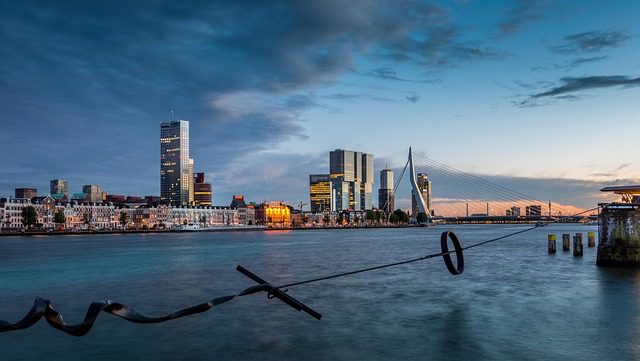
We arrived in Rotterdam on a warm June afternoon, driving south from Amsterdam after three days in the capital. We expected a port city — industrial, functional, maybe a little grey. What we found was something closer to a living architecture museum crossed with a genuinely great summer city. The skyline alone was worth the detour.
Rotterdam in summer is a completely different Dutch experience. Where Amsterdam is canals and gabled merchant houses, Rotterdam is bold geometry, waterfront terraces, and a confidence that comes from having rebuilt itself from scratch after the Second World War. If you’ve done Amsterdam and you want something that feels less like a postcard and more like a real city with a pulse, this is where to go.
Rotterdam in summer is worth visiting for its stunning modern architecture, lively waterfront, excellent day-trip options, and a food scene that quietly rivals Amsterdam. It’s easier to navigate, less crowded, and surprisingly affordable for the Netherlands. Give it at least two full days — one for the city, one for a day trip to Kinderdijk or Delft.
What makes Rotterdam a different Dutch experience
Rotterdam is the largest port in Europe and the second-biggest city in the Netherlands. In May 1940, the German Luftwaffe bombed the historic city centre into rubble in under an hour. What rose in its place was something architects still come to study: a city rebuilt with ambition, experimentation, and a refusal to simply reconstruct what was lost.
The architecture that defines the city
Walk ten minutes from Rotterdam Centraal station and you will see why the city draws architecture tourists from across Europe. The Cube Houses (Kubuswoningen) at Blaak are exactly as strange and delightful as they look in photos — yellow-sided cubes tilted at 45 degrees, inhabited by actual residents. Nearby, the Markthal is a giant horseshoe of apartments with the most painted interior ceiling in the Netherlands stretched across a food market. The Erasmus Bridge curves over the Maas river like a cable-stayed harp. The De Rotterdam tower complex, designed by Rem Koolhaas, is three interconnected skyscrapers that look different from every angle.
A city rebuilt with a different character
What this architectural history produced is a city that feels young, restless, and proud of itself in a way that older Dutch cities don’t. Rotterdam has a much larger student population than Amsterdam relative to its size, a thriving arts scene centred around the Witte de With cultural quarter, and a streetfood culture that reflects a genuinely international population. We ate Surinamese roti, Cape Verdean seafood, and Portuguese pastries within two blocks of each other on our first evening. It felt nothing like a tourist trap and everything like a real city.
What to do in Rotterdam in summer
Rotterdam rewards walking and spontaneity, but a few things are worth planning ahead for.
The architecture walk
Start at Rotterdam Centraal (the train station itself is worth ten minutes of your time — it looks like a giant arrow aimed at the sky), then walk south toward Blaak. Visit the Cube Houses, cross to the Markthal for lunch, then continue to the Erasmus Bridge and the waterfront promenade along the Maas. This is the core Rotterdam walk that most visitors do in three to four hours, and it delivers.
The Maas waterfront in summer
The south bank of the Maas is different in summer. The Hotel New York (the former headquarters of the Holland-America Line, from which millions emigrated to America in the early 20th century) runs a waterfront terrace that gets genuinely lively on warm evenings. The SS Rotterdam, a 1950s ocean liner permanently moored nearby, does guided tours. The FENIX Food Factory, a converted warehouse, is the best food market in the city and works well for lunch or an early evening beer on the dockside terrace.
Day trips from Rotterdam
Rotterdam’s location makes it ideal as a base. Kinderdijk, the UNESCO-listed windmill field 15 km east, is one of the most iconic images in the Netherlands and genuinely worth the trip — especially in summer when the surrounding polder landscape is green and the windmills are often running. Delft is 12 minutes by train, and it’s everything Rotterdam is not: pretty historic canals, Vermeer’s city, a proper old Dutch centre. The contrast between the two cities in a single day is striking. The Hague is 25 minutes, useful if you want to add a beach (Scheveningen) or a museum day.
Read next Wondering whether the Netherlands beyond Amsterdam is worth your time? We have a full take: Is the Netherlands Beyond Amsterdam Worth It?
Where to eat, drink, and wander in Rotterdam
Here is our quick-reference list of what actually worked for us, and a few things to skip.
The indoor market under the painted horseshoe arch is the best single stop for food in the city. Go at lunch, graze across the stalls, and sit outside if the weather allows. It gets crowded by early afternoon on weekends, so arrive before noon.
Across the water on the south bank, this converted warehouse is less polished than the Markthal and more interesting. Local producers, small-batch beer, and a terrace right on the water. We went twice.
The cultural quarter, named after a 17th-century Dutch admiral, runs through a long street of galleries, independent bars, and restaurants. On summer evenings the whole street spills out onto the pavement. Good for an evening wander and a longer dinner.
The 185-metre observation tower with a revolving restaurant. We went for the view rather than the food. On a clear summer day you can see the entire port complex stretching to the sea — genuinely impressive scale. Worth the entrance fee once.
The permanent collection is currently in storage for renovation, but the Depot — a mirrored sphere building that opened in 2021 — is open for art storage tours. Architecturally it is one of the strangest and most interesting buildings in the city.
The terrace at Hotel New York on the south bank is the best place in the city for a long summer evening. The building’s history alone (former emigration headquarters for Holland-America Line) makes it worth visiting, and the summer light on the river at 9 pm is hard to beat.
Take the water taxi from the Erasmus Bridge. It’s a 35-minute ride and deposits you at the windmill field. Much better than the bus and gives you the proper approach over the water. Book the visitor centre ahead if you want to go inside a windmill.
You can pay to enter one cube house that has been turned into a small museum. We went in. It is a novelty — tiny rooms, odd angles, not much content. The exterior is the point. Save the entrance fee.
Get our best travel tips in your inbox
Monthly stories from Rovaniemi — Arctic tips, packing lists, and the places we keep coming back to.