What Is a Coolcation? The 2026 Summer Travel Trend Explained
A Finnish-based travel couple breaks down what a coolcation actually means, why it’s the defining summer travel trend of 2026, and which destinations are worth the hype — from someone who lives in the Nordics year-round.

We live in Rovaniemi, on the Arctic Circle in Finnish Lapland. That means when most of Europe is baking under a 38 °C heatwave in July, we’re sitting on a lakeside dock in 22 °C sunshine, watching the midnight sun turn the water gold. We didn’t set out to be coolcation evangelists — we just happen to live at the destination everyone is suddenly searching for.
If you’ve heard the word “coolcation” and wondered what it actually means, whether it’s just marketing, and where to actually go — you’re in the right place. We’ve travelled to 25 countries and watched this trend build from the ground up. Here is the honest version.
A coolcation is a holiday deliberately chosen for its cooler temperatures — typically in the Nordic countries, Iceland, Ireland, Scotland, or other northern destinations — as an alternative to a traditional sun-and-sand trip. It’s the dominant summer travel trend of 2026, driven by worsening southern European heatwaves and a shift in what “summer holiday” means for many families.
What is a coolcation, exactly?
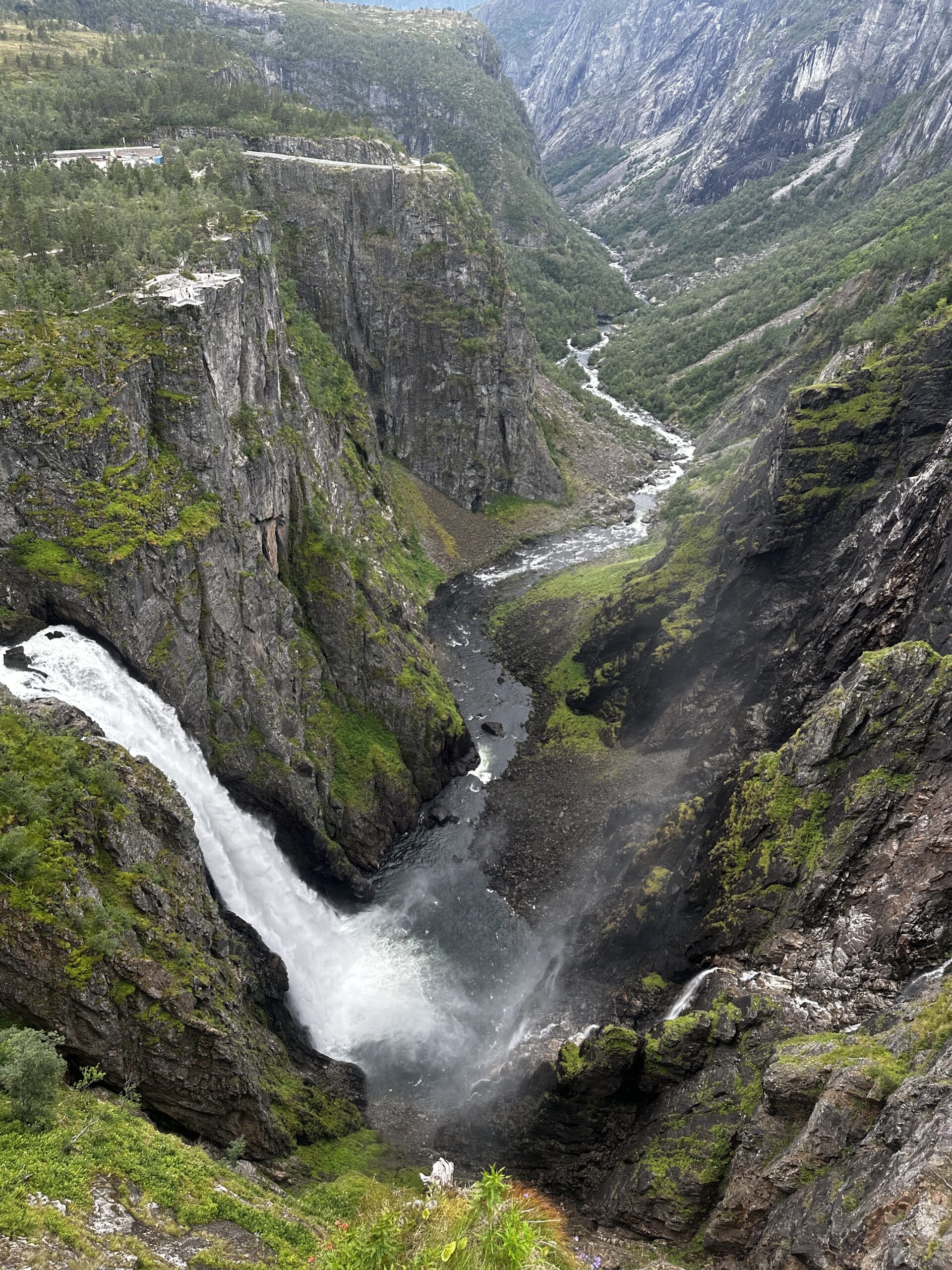
The word “coolcation” is a portmanteau of “cool” and “vacation.” It refers to any holiday deliberately chosen for its mild or cool climate rather than the traditional pursuit of sunshine. Think: Norway’s fjords in June, the Finnish archipelago in July, Iceland’s waterfalls in August — places where the thermometer rarely breaks 22 °C and the air feels clean enough to drink.
It is not a new concept — Scandinavians have been escaping south-European summers for decades. What’s new is the scale, the vocabulary, and the fact that searches for Nordic summer travel are up triple digits in 2026.
What counts as a coolcation destination?
- Nordic countries: Finland, Norway, Sweden, Denmark — consistently cool summers, long evenings, very low humidity.
- Iceland: peak temperatures of 13–15 °C, midnight sun, dramatic landscapes. Classic coolcation.
- Faroe Islands: even cooler and more dramatic than Iceland; niche but growing fast.
- Ireland and Scotland: the Atlantic coast offers genuine cool and wild scenery.
- The Alps and Dolomites: technically still warm Europe but at altitude, making them a popular option for those who don’t want to fly further north.
What a coolcation is not
- It is not a synonym for “cold holiday” — most coolcation destinations are genuinely pleasant in summer, just not scorching.
- It is not exclusively about weather — many coolcation travellers are also chasing midnight sun, wildlife (puffins, reindeer, seals), and outdoor adventure that is physically impossible in 38 °C heat.
- It is not necessarily budget travel — Norway and Iceland are expensive; the Faroe Islands more so. Finland and Sweden offer the best value in the coolcation tier.
Why coolcations are trending so hard in 2026
The trend has been building for years, but 2026 is the tipping point. Three forces converged at once.
Force 1 — Southern Europe is getting hotter, faster
Spain, Italy, Greece, and Portugal have all recorded record-breaking summer temperatures in recent years. June 2025 saw multiple Spanish cities hit 45 °C. Families who paid for a pool villa in Alicante and spent three days sheltering from the heat are not going back. They are going north instead.
Force 2 — The midnight sun is finally getting mainstream attention
We have watched this from the front row in Rovaniemi. The midnight sun used to be a niche curiosity. Now it is a bucket-list experience that people plan years in advance. There is something genuinely magical about sitting outside at midnight in full daylight — and it cannot be replicated anywhere south of the 60th parallel.
Force 3 — The post-pandemic reshuffling of travel priorities
A lot of travellers came back from 2022–2024 with a clearer sense of what they actually want from a holiday: space, nature, unhurried time, and memories that feel earned rather than manufactured. The Nordic outdoors delivers all of that. The packed beach resorts of southern Europe often do not.
The result: Scandinavian travel searches are projected up 35% for summer 2026, and airline seat availability to Helsinki, Oslo, Stockholm, and Reykjavik is tighter than it has been in a decade.
Read next Planning a trip to northern Finland? Our guide to using ChatGPT for travel planning will help you build your itinerary from scratch in under 20 minutes.
The best coolcation destinations in Europe for 2026

We have visited all of these. Here is the quick-reference breakdown — honest, not promotional.
Summer high: 20–24 °C. Best for: lake life, sauna culture, midnight sun, mökki (cottage) stays, and total quiet. Best base: Rovaniemi for Lapland, Helsinki for city + archipelago. Hidden advantage: Finland is the most affordable Nordic country and the least crowded in summer.
Summer high: 18–23 °C in the fjords. Best for: dramatic scenery, hiking, fjord kayaking. Best base: Bergen or Ålesund for fjord access. Warning: Norway is expensive — budget at least 20–25% more than Finland per day.
Summer high: 13–16 °C. Best for: waterfalls, geysers, puffins (June–August), the Ring Road. Best time: June for midnight sun + puffins at peak. Warning: the most expensive coolcation destination; plan accordingly.
Summer high: 11–14 °C. Best for: dramatic cliffs, Mykines puffin colony, complete solitude, Instagram-worthy landscapes that few people have actually seen in person. Warning: pack for all four seasons every day — the weather is genuinely unpredictable.
Summer high: 16–19 °C. Best for: the Wild Atlantic Way, green countryside, pubs, and a language barrier of zero. Best time: June–July when it’s driest. Hidden advantage: English-speaking, right-hand drive, easy to road trip.
Summer high: 20–25 °C. Best for: the Stockholm archipelago, Midsommar (June 19–20), lake swimming, cycle paths. Best base: Stockholm for archipelago access; Göteborg for the west coast.
Summer high: 20–22 °C. Best for: Copenhagen as a city base, cycling culture, the design-forward food scene, and easy connections to Sweden. Best for: families or couples who want Nordic culture without full wilderness immersion.
Summer high: 17–19 °C. Best for: the Highlands, Isle of Skye, whisky distilleries, and a deeply personal landscape. Warning: midges (tiny biting insects) are real in July–August; pack repellent.
Get our best travel tips in your inbox
Monthly stories from Rovaniemi — Arctic tips, packing lists, and the places we keep coming back to.