Rovaniemi vs Tromsø: Which Is Better for Northern Lights?
We live in Rovaniemi and have chased the aurora in both Finnish Lapland and Tromsø. Here’s our honest side-by-side — no affiliate bias, just what we’ve actually experienced.
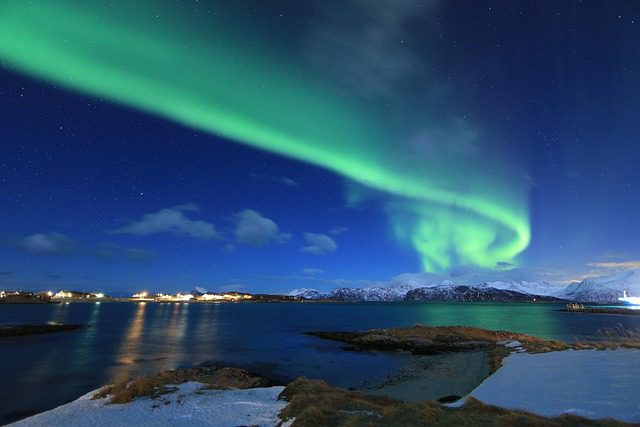
We’ve done both. Joona has watched the aurora from Rovaniemi’s forests for over a decade; we spent a week in Tromsø the winter before last. Both places are genuinely spectacular — but they’re not interchangeable, and the “which is better” question actually has a real answer depending on what kind of traveller you are.
Here’s the honest comparison, from two people who live on the Arctic Circle and have no package tour to sell you.
Both are world-class aurora destinations — but they suit different travellers. Rovaniemi wins on accessibility, atmosphere, and family-friendly activities; Tromsø wins on raw aurora frequency and dramatic fjord scenery. If you have one trip, base your choice on what else you want from the holiday, not just the lights.
The core question: same lights, different world
Both Rovaniemi and Tromsø sit well above the Arctic Circle and fall within the auroral oval — the ring around the magnetic pole where aurora activity is most concentrated. The geomagnetic activity that creates the lights (solar wind hitting Earth’s magnetosphere) is essentially the same over both cities. What differs is everything around the lights: weather patterns, accessibility, cost, crowds, and what you do when the sky clouds over.
The key differences at a glance
- Latitude: Rovaniemi is at 66°N (right on the Arctic Circle); Tromsø is at 69.6°N — further north, but both are firmly inside the aurora zone.
- Aurora season: Late August to early April in both locations, whenever nights are dark enough.
- Climate: Rovaniemi has a continental subarctic climate — cold, stable, and often clear. Tromsø sits on a coastal fjord and gets more cloud cover from Atlantic weather systems.
- Infrastructure: Rovaniemi has a major international airport with direct flights from across Europe. Tromsø is well-connected but tends to require a connection through Oslo or Stockholm.
The bottom line upfront: if aurora frequency were the only variable, Tromsø’s higher latitude gives it a marginal edge on very weak KP nights. But Rovaniemi’s more stable winter weather means you’re often more likely to actually see a clear sky when the lights appear.
Aurora frequency: Rovaniemi vs Tromsø
This is where we get specific. Tromsø sits roughly 400 km further north, which means on nights with a KP index of 1 or 2, the aurora oval may dip over Tromsø but not quite reach Rovaniemi. On KP 3+ nights — which represent the majority of visible aurora nights — both cities are well inside the oval and it makes no practical difference. What does make a difference is cloud cover.
Cloud cover: the real deciding factor
- Tromsø cloud cover: The city sits on a coastal island exposed to Atlantic weather systems. Cloud cover is frequent and can persist for days. Many travellers spend a week in Tromsø without seeing a single aurora because of overcast skies.
- Rovaniemi cloud cover: The continental interior climate means more stable, drier air. We typically get 15–20 clear or partially clear nights per month in peak winter (Dec–Feb). It’s not guaranteed, but statistically more reliable.
- The rover advantage: In Tromsø, storm-chasing tours drive hours into the fjords to find a gap in the clouds — which works, but adds cost and exhaustion. In Rovaniemi, you’re already inland; a short 20-minute drive usually gets you clear skies.

Getting there and getting around
Getting to Rovaniemi is straightforward. Finnair, Norwegian, and a growing list of charter carriers fly direct from London, Amsterdam, Frankfurt, Dublin, and other major European hubs — especially in winter. The flight from London is around 3 hours. Tromsø also has good connections but almost always requires a change in Oslo or Stockholm, adding 3–5 hours to a European journey.
Getting around once you arrive
The single best window is 10 pm to 1 am local time. That’s when Rovaniemi passes under the part of the auroral oval with the strongest activity. If you only have one or two clear nights, plan around this window.
Give your eyes at least 15–20 minutes of full darkness before you decide nothing is happening. A faint green band that looks like a cloud to a new arrival is obvious aurora to fully dark-adapted eyes.
The most common mistake we see is tourists going out at 8 pm, freezing for an hour, and going to bed. The real show often starts after you’ve gone to sleep. Commit to the 10 pm – 1 am window or delay your evening.
A recent iPhone or Pixel in Night mode can pick up aurora that looks like a faint grey band to the naked eye. Use it as a “sensor” first, then enjoy with your eyes.
Winter nights at −25 °C require real layers: wool base, down mid, wind-blocking shell, insulated boots, and hand warmers. Most “we didn’t see anything” trips are really “we went inside too soon” trips.
The single biggest predictor of success isn’t luck — it’s the number of nights you give yourself. 3 nights in peak season gets most travelers at least one clear aurora window.
Accommodation, cost, and vibe
Both cities cater to winter tourists and have a strong range of accommodation. But the feel — and the price — is quite different. Rovaniemi has leaned into the Christmas and family market, which means a huge range of log cabins, glass igloos, and mid-range hotels. Tromsø is a genuine city with year-round tourism and a lively bar scene; prices reflect that.
Side-by-side cost comparison
- Budget hotels: Rovaniemi from ~€80/night; Tromsø from ~€110/night.
- Glass igloo / aurora cabin: Rovaniemi from ~€300/night (Kakslauttanen, Arctic TreeHouse, etc.); Tromsø equivalents start from ~€400/night.
- Self-catering apartments: Good options in both cities; Rovaniemi tends to be 15–25% cheaper.
- Food and drink: Both are in Finland/Norway — expensive by European standards. Budget €15–25 per meal per person. Tromsø has a better restaurant scene but higher prices.
- Aurora tours: Roughly €80–€150 per person in both locations for a standard guided evening tour.
Our read on vibe: Rovaniemi feels magical and fairy-tale, especially for families or couples who want the full Lapland snow-forest-reindeer experience. Tromsø feels more like a real city that happens to have the aurora — which some travellers prefer, especially if they’re travelling solo or as a group of adults who want nightlife alongside the northern lights.
What else is there to do?
This is where the two destinations diverge most. The aurora is the main draw, but what you do on cloudy nights — or during the day — varies dramatically. Rovaniemi has built an entire ecosystem of Lapland activities; Tromsø offers dramatic fjord scenery and a genuine city to explore.
- Rovaniemi: Reindeer safaris, husky sledding, snowmobile tours, Santa Claus Village, ice fishing, snowshoeing in Ounasvaara, the Arktikum museum, and glass igloos for aurora viewing without leaving your bed.
- Tromsø: Fjord boat trips, whale watching (Nov–Jan), dog sledding, ski resort (Tromsø Alpine), Polaria Arctic museum, excellent restaurants, and a surprisingly good craft beer scene.
- For families with children: Rovaniemi wins clearly — Santa, reindeers, and the Lapland fantasy is hard to beat.
- For outdoor adventurers: Tromsø’s fjord landscapes and ski-touring options are exceptional.
- For couples: Both are magical; Rovaniemi’s glass igloos and forest cabins edge it for romance.

Our honest verdict
- Choose based on weather, not latitude. Check the 10-day cloud forecast for both cities before booking. In any given week, one will almost always be clearer than the other — and that matters more than being 400 km further north.
- Book at least 4–5 nights. One or two nights is a gamble in either destination. Weather windows open and close unpredictably; you need time on your side.
- Rovaniemi is the better all-rounder. If you have children, want the full Lapland snow-and-reindeer experience, or are on a tighter budget, Rovaniemi delivers more reliably. The activity ecosystem is deeper, the flights are often more direct, and the inland weather is more stable.
- Tromsø is better if the city itself appeals. If you want dramatic fjord scenery, good restaurants, whale watching, or ski touring alongside the aurora, Tromsø adds dimensions Rovaniemi can’t match.
- Don’t book a single night of aurora glamping as your only shot. Glass igloos and aurora cabins are wonderful, but a single overcast night will leave you disappointed. Layer that experience into a longer stay.
- Our personal pick: We’d choose Rovaniemi — because we live here and we know exactly where to go when the clouds roll in. But we’d recommend Tromsø without hesitation to anyone who’s already done Rovaniemi and wants something different.
Frequently asked questions
Is Tromsø or Rovaniemi better for seeing the northern lights?
Neither is definitively better — it depends on weather. Tromsø sits further north (69.6°N vs 66°N) giving a marginal edge on weak aurora nights, but Rovaniemi’s more stable continental climate means clearer skies more often. Over a 5-night stay, your odds of at least one good aurora night are similar in both locations.
Which city is easier to get to from Europe?
Rovaniemi generally has more direct flight options from major European hubs, especially in winter. Flights from London, Amsterdam, and Frankfurt are common with Finnair and charter operators. Tromsø usually requires a connection through Oslo or Stockholm, adding several hours to the journey.
Is Rovaniemi cheaper than Tromsø?
Yes, typically by 15–25% for accommodation and overall costs. Both are in expensive northern countries, but Norway’s costs are generally higher than Finland’s. Budget accommodation, food, and tours all tend to be cheaper in Rovaniemi.
Can you do a day trip from Rovaniemi to Tromsø, or vice versa?
Not really — the driving distance is around 500 km (about 6 hours each way), and the roads cross between Finland and Norway. Some travellers combine both on a longer 10–14 day trip, splitting time between the two. There are also occasional bus connections, but they’re slow.
What’s the best time of year to visit both for northern lights?
December to February gives the darkest skies and coldest temperatures in both locations. Late September to November and February to March offer a balance of darkness, slightly milder weather, and (in spring) longer daylight hours for daytime activities. We personally love late February in Rovaniemi — stable cold, decent snow, and the first hints of blue-hour twilight returning.
Do you need a car in Rovaniemi for aurora hunting?
A car gives you much more flexibility — you can chase clear sky gaps and reach dark-sky spots at midnight without relying on tour schedules. That said, organised aurora tours from Rovaniemi are excellent and include transport. If you’re not comfortable driving on icy roads at night, a tour is a perfectly good alternative.
Joona & Alla
A Finnish-Ukrainian couple living in Rovaniemi, Finland. Joona is a marketing professional in Lapland tourism; Alla is an AI Engineer. Together we’ve visited 25 countries and share honest, locally-grounded travel writing from our home in the Arctic.
Read our full story →If Rovaniemi wins: the aurora tours we’d book
Three tours from the operator Joona knows best, at three budgets. Live dates and prices, booked on the spot.
Aurora bus tour — from €109
The budget way to get out of the city lights with a guide and hot drinks. Good first night.
Check dates & book →Small-group aurora hunt — from €199
Max 8 guests, a guide who reads the cloud maps, and a campfire when the sky opens. The one we send friends on.
Check dates & book →Private aurora hunt — from €1990
Your own guide and car for the night — for proposals, photographers and families who want the lights on their terms.
Check dates & book →Compare Norway campervans in one search
160+ rental brands, free 1GB eSIM with every booking, and 5% off with code HUNGRYTRAVELFAMILY5. It’s how we price our own summers on the road.
Check prices →