Freedom to Roam: How Camping Works in the Nordics
The Nordic countries give you the legal right to sleep almost anywhere in nature — but the rules are different in every country. A Rovaniemi-based couple explains what freedom to roam actually means, where it applies, and what you need to know before you pitch a tent.
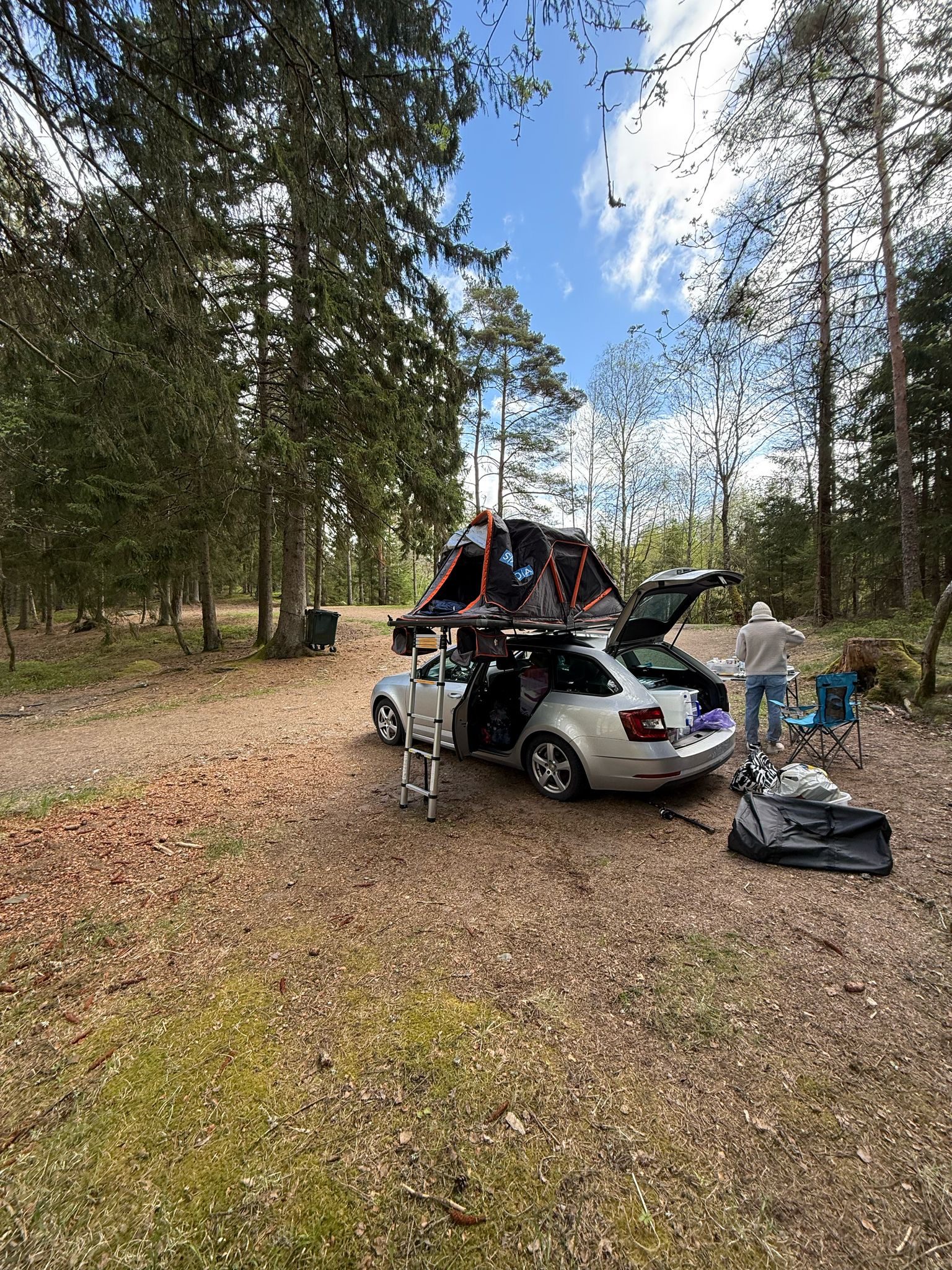
We grew up hearing about allemansrätten in Sweden and jokamiehenoikeus in Finland long before we had words to explain it to anyone else. Now that we’ve camped our way through all five Nordic countries — Finland, Sweden, Norway, Denmark, and Iceland — we get the question almost every week: can I really just camp anywhere?
The honest answer is: mostly yes, with important differences from country to country, and a few rules that people routinely get wrong. This guide is the plain-language version of what freedom to roam actually grants you, what it doesn’t, and how to use it without turning into the tourist that ruins it for everyone else.
In Finland, Sweden, and Norway you have a legal right — called everyman’s right — to camp on almost any uncultivated land for 1–2 nights without permission. Denmark largely does not have this right; Iceland has it but with specific limitations near farms and private land. The core rule everywhere: leave no trace, stay away from private homes, and don’t stay more than a night or two in one spot.
What freedom to roam actually is — and what it isn’t
Freedom to roam — known as allemansrätten in Swedish, jokamiehenoikeus in Finnish, and allemannsretten in Norwegian — is a legal principle that gives members of the public the right to access and enjoy nature on both public and private land, as long as they follow certain conduct rules. It’s not a camping free-for-all. It’s a carefully balanced relationship between individual freedom and the landowner’s rights.
What it grants you
- The right to walk, cycle, ski, or ride through forests, fields, and along coastlines — including private land — as long as you don’t cause damage.
- The right to camp overnight (usually 1–2 nights) in most natural areas without asking the landowner’s permission.
- The right to pick berries, mushrooms, and wildflowers for personal use.
- The right to swim and row a boat in most natural waterways.
What it does not grant you
- The right to camp in someone’s garden, yard, or close to a private dwelling — typically a 150–200 metre exclusion zone applies.
- The right to light a fire whenever you want (fire restrictions apply, especially in summer).
- The right to damage crops, fences, or natural features.
- The right to leave rubbish or human waste without properly disposing of it.
- The right to camp in protected nature reserves unless signs specifically say it’s allowed.
The concept sounds simple but requires judgment. A meadow next to a farm looks uncultivated — but if someone is actively grazing sheep there, it isn’t. A beach feels public — but the land 10 metres back might be private. In practice, the Nordics mostly trust people to read context well, and the system works because most people do.
Finland: jokamiehenoikeus — the rules we live by
We live in Rovaniemi, so Finnish jokamiehenoikeus is the version we know best. Finland’s everyman’s right is broad, well-established in law, and genuinely generous for outdoor travellers. The Finnish national trail network — including the iconic Karhunkierros trail in Oulanka and the vast wilderness of Urho Kekkonen National Park — is built around the expectation that people will use it.
Key Finnish rules in plain language
- Camping: You may camp in the wilderness for a few days at a time without permission. “A few days” is deliberately vague in Finnish law — the general rule is not to stay so long that your presence constitutes a nuisance. In practice, 1–2 nights in any one spot is the norm; no more than a week in the same place.
- Distance from homes: Stay far enough from private homes that you don’t cause disturbance. The commonly cited guideline is at least 150 metres from a dwelling.
- Fire: You may light a campfire in places where it is clearly safe and no fire prohibition is in force. In summer, fire restrictions are common across Lapland and southern Finland. Always check the Metsähallitus website or 112 app before lighting anything.
- Water: Drinking water from Finnish lakes and streams is generally safe in Lapland and the wilderness areas. In the south, check for algae warnings in summer.
- National parks: Inside national parks, additional rules apply. Some parks have designated camping zones only; others allow free camping in the backcountry. Always check the park’s own rules at luontoon.fi before you go.
One thing we tell every visitor to Rovaniemi: Lapland in summer is extraordinary for wild camping precisely because of this law. You can park on a forest road, walk 200 metres to a lakeside, and pitch a tent with the midnight sun reflecting off the water — legally and freely. It’s one of the things that makes Finland genuinely special.
Sweden and Norway: allemansrätten in practice
Sweden’s allemansrätten and Norway’s allemannsretten operate on the same philosophical foundation as Finland’s version, but with some differences worth knowing if you’re planning a Scandinavian road trip.
Sweden
- You may camp anywhere in nature for 1–2 nights without permission.
- Stay at least 70 metres from the nearest house — closer than Finland’s guideline, but the principle is the same: don’t disturb anyone.
- Open fires are permitted where it is clearly safe; they are banned during declared fire risk periods (common in dry summers). Sweden had severe restrictions after the 2018 wildfires, and local fire bans have returned in subsequent dry summers. Check Naturvårdsverket’s website.
- You may not camp in cultivated fields, gardens, or on private land that is actively managed.
- The Stockholm Archipelago is a magnificent place to apply this law — islands that look uninhabited generally are open for overnight anchoring and camping.
Norway
- Norway’s Outdoor Recreation Act grants the right to camp on uncultivated land (outfields) for up to 2 nights without permission. Longer stays require landowner consent.
- Stay at least 150 metres from the nearest inhabited house or cabin.
- Campfires are banned between 15 April and 15 September throughout Norway — this is a national blanket rule, stricter than Finland or Sweden. Always use a camping stove in summer.
- Cultivated land (fields, orchards, tended gardens) is off-limits year-round.
- The Norwegian coast and fjord trails are perfect for this. We’ve camped on cliff ledges above Geirangerfjord and on small beaches in the Lofoten Islands — both completely legal under allemannsretten.
Nordic travel tips from our front door
We write from Finnish Lapland about the trips we actually take — wild camping, ferry routes, midnight sun hikes. No spam, ever.
Denmark and Iceland: the exceptions to the rule
Denmark and Iceland both attract a lot of Nordic-inspired campers who arrive expecting the same open-access laws as Finland, Sweden, and Norway. They are often surprised. The rules are fundamentally different in both countries.
Denmark
- Denmark does not have a general freedom to roam that includes overnight camping on private land. Most of Denmark is agricultural, and landowners have not agreed to public camping access.
- You may walk and cycle on public paths and designated access areas, but pitching a tent requires either a designated campsite or explicit landowner permission.
- The Danish “Primitive Campsites” network (primitive shelters, or shelters) offers about 1,000 designated wild camping spots across the country — many of them free or very cheap. These are the legal option for camping outside formal campsites in Denmark.
- On the coastline, the rule is slightly more generous: you may camp on beaches below the high-water mark in some areas, but check local rules. The west coast of Jutland has some of the most accessible beach camping.
Iceland
- Iceland technically has freedom to roam on uncultivated land, but the context differs from mainland Scandinavia. Most of Iceland’s dramatic interior — the Highlands — is state land and genuinely open for camping.
- Near farms, private land, and in the popular South Coast corridor, camping outside designated sites is increasingly restricted. Parts of the south coast have been closed to wild camping entirely due to overuse.
- In national parks (Þingvellir, Skaftafell, Snæfellsjökull), camping is only allowed in designated areas.
- The Interior Highlands — the F-road territory — is one of the last truly wild camping landscapes in Europe. If you have the right vehicle and the confidence, places like Landmannalaugar and the Kjölur route offer extraordinary wild camping that is both legal and unforgettable.
Rules and courtesies that apply in every Nordic country
Across all the Nordic countries, there is a shared culture of outdoor ethics that goes beyond what the law requires. Some of it is written; most of it is understood. Breaking these unwritten rules is how people end up with “no camping” signs appearing on previously open land.
- Leave no trace: Pack out everything you bring in. This includes food scraps, wet wipes, and any toilet paper if you can’t bury waste properly. A site that looks exactly as you found it is the goal.
- Human waste: Dig a small hole (at least 20 cm deep) at least 60 metres from any water source. Cat-hole burial is the standard method. In some popular trails, trowels and bags are provided.
- No cutting of living trees: You may use fallen deadwood for fire fuel, but cutting living branches or trees is both illegal and ecologically damaging. The Nordics take this seriously.
- Keep noise down: The culture of quiet in Nordic nature is real. Music through speakers at a lakeside campsite at 11 pm is unwelcome everywhere.
- Dogs on lead near livestock: Even where dogs are allowed off-lead in general, they must be on a lead near grazing animals. Reindeer herding areas in Finnish Lapland are a key example — loose dogs can cause serious harm to reindeer.
- Don’t block access points: Parking across a forest road or farm gate — even for an hour — is considered rude and can genuinely block emergency vehicles or working farmers.
- Respect closed periods: Some areas are closed to visitors during bird nesting season (usually April–July). Look for signs and respect them.
Practical camping tips from our Nordic road trips
We’ve camped in the Nordics in everything from minus 25°C Lapland winters to a soggy July week in the Faroe Islands. Here is the gear and practical knowledge that has actually changed how we camp.
- A freestanding tent: Many of the best Nordic campsites are on rocky ground — tent pegs are useless. A freestanding tent (one that stands without stakes) opens up far more locations, especially on the Faroe Islands, Norwegian coast, and Iceland’s lava fields.
- A proper sleeping bag for the temperature: Scandinavian summer nights are warmer than they sound, but nights in Lapland and Iceland can drop to 5°C even in July. A 5°C-rated bag is a sensible baseline.
- A camping stove — always: Given the fire restrictions across the region (especially Norway in summer), a gas or alcohol stove is non-negotiable. We use a simple canister stove that weighs under 100 grams.
- A water filter or purification tablets: Lapland and Norwegian mountain streams are clean enough to drink without treatment in most cases, but having a Sawyer Squeeze or iodine tablets saves anxiety and stays safe if you’re in agricultural areas.
- Mosquito protection in Finland and Sweden: July in Finnish Lapland means mosquitoes. A head net, DEET spray, and a tent with good mesh are not optional. We still have strong feelings about our first Lapland tent that had a failing zip.
- Apps to check fire restrictions: In Finland, the 112 app shows fire restrictions in real time. In Sweden, check Naturvårdsverket. In Norway, check Yr.no or the local municipality.
- The Danish shelters app: If you’re camping in Denmark, download the Danish Primitive Shelters app — it maps all the legal wild camping sites with availability information. It’s free and genuinely well-maintained.
- Know your sunrise/sunset times: In June and July in Lapland, the sun doesn’t set at all. This is beautiful but disorienting — bring a sleep mask and don’t plan your day around darkness.
Mistakes we made (and see other travellers make)
After years of Nordic camping — including a few memorable errors — these are the mistakes we see most often and wish someone had warned us about earlier.
- Camping too close to the road. The best spots are always a five-minute walk in. Roadside camping is both visible (robbing you of solitude) and often on a verge that technically belongs to a road authority — not uncultivated land.
- Assuming Iceland works like Finland. We’ve met visitors who drove straight to the South Coast of Iceland, pulled off at a waterfall, and pitched a tent — only to be asked to move by a farmer within an hour. Iceland has been tightening access rules significantly since 2018.
- Lighting a fire in Norway in summer. The blanket ban from 15 April to 15 September catches people out every year. We saw a group in Lofoten light a campfire in July, not knowing — the fine can be significant and the fire risk in dry years is real.
- Not packing out waste. In Norwegian and Swedish national parks, rangers have started issuing fines for left waste. More importantly, it genuinely degrades the land that makes wild camping worth doing in the first place.
- Underestimating Danish regulations. Denmark looks gentle and accessible — it’s a small, agricultural country. But precisely because it’s so farmed and densely populated, the rules around camping are stricter than anywhere else in the Nordics. Treat it more like western Europe than like Finland.
- Camping inside the 150-metre zone. We once pitched a tent on what looked like open heathland in Norway, only to realize at dawn that a farm cottage we hadn’t seen in the dark was about 80 metres away. The farmer was perfectly polite, but it was embarrassing. Always scout the surroundings before dark.
Frequently asked questions about Nordic camping and freedom to roam
Is wild camping legal in all Nordic countries?
Freedom to roam — including overnight camping — is a legal right in Finland, Sweden, and Norway. Denmark does not have this right on private land; instead it has a network of designated primitive campsites. Iceland has freedom to roam on uncultivated land in principle, but access near farms and in popular areas is increasingly restricted. Always check the rules for the specific area you’re visiting.
How many nights can I camp in the same spot under freedom to roam?
The standard across Finland, Sweden, and Norway is 1–2 nights in any one location. Norway’s Outdoor Recreation Act specifies 2 nights explicitly; Finland and Sweden use vaguer language that courts have generally interpreted as a few days at most. If you want to stay longer in one spot, you should ask the landowner’s permission — and in most cases in Lapland, the answer will be yes.
Can I light a campfire anywhere in the Nordics?
No. Norway has a blanket ban on open fires from 15 April to 15 September. Finland and Sweden allow fires in safe conditions but issue area-specific bans during dry periods — check the Finnish 112 app or Sweden’s Naturvårdsverket website before lighting anything. Iceland’s volcanic landscape presents specific risks. Even where fires are legal, always use an existing fire ring if one is present, never cut living wood, and fully extinguish before you leave.
What is the Danish primitive shelter system and how do I use it?
Denmark operates a network of roughly 1,000 primitive overnight sites — wooden shelters, fire pits, and basic toilets — spread across forests, coastlines, and countryside. Most are free or cost a small fee (around €5–10). Download the “Primitive Shelters” app (Naturens Rige) to find and navigate to them. They are the main legal option for camping outside formal campsites in Denmark and are genuinely well-maintained.
Do I need a permit to camp in Finnish or Norwegian national parks?
It depends on the park. Many Finnish national parks allow free camping in the backcountry under jokamiehenoikeus, with designated fire sites and composting toilets along marked trails. Others restrict camping to designated zones. Check luontoon.fi for Finnish parks. In Norway, most national parks allow free camping under allemannsretten, but some sensitive areas require you to use designated sites. Check with each park’s administration before your trip.
Can I camp on Faroe Islands beaches or coastline?
The Faroe Islands follow Danish and local Faroese law rather than Norwegian or Swedish freedom to roam. You may camp on most uncultivated land with the implied permission of the land — practically speaking, this means open hilltops and coastline away from farms and houses. However, the Faroe Islands is private land in most cases, and access has been tightened in areas near villages. Ask locally if in doubt. Camping near the sea cliffs is breathtaking but bring a freestanding tent — the wind can exceed 80 km/h without warning.
We’ve been saying “we live in Rovaniemi” as a credential throughout this guide, and it’s true that living here gives us a different relationship to jokamiehenoikeus than a visitor passing through. We walk into the forest on autumn evenings to pick cloudberries. We camp on frozen lakes in January and watch the stars in -20°C cold. This law is part of daily life for us, not a travel hack.
That perspective makes us both passionate advocates and slightly protective of the system. Freedom to roam works because Nordic culture has collectively agreed to use it responsibly. The moment tourists start leaving rubbish at popular spots, or camping in someone’s vegetable garden, or lighting fires during bans, the political will to maintain these rights erodes. We’ve watched it happen in parts of Iceland already.
So: use it. Sleep by a Finnish lake. Camp on a Norwegian cliff. Walk across a Swedish meadow at midnight in June. These are extraordinary things that this corner of the world offers freely. Just carry your rubbish out, keep your distance from people’s homes, and leave the landscape the way you found it — so the next person can have the same experience.
Joona & Alla
A Finnish-Ukrainian couple living in Rovaniemi, Finland. Joona is a marketing professional in Lapland tourism; Alla is an AI engineer. Together we’ve visited 21 countries and share honest, locally-grounded travel writing from our home in the Arctic.
Read our full story →