Best Time to See the Northern Lights in Rovaniemi — 2026 Local Guide
A Rovaniemi-based couple breaks down exactly when the aurora is strongest, which months give you the best odds, and the real trade-offs between early, mid, and late winter.

We’ve planned more than a hundred trips from our home in Finnish Lapland — some for clients, some for weekend road trips across Norway, and more recently a lot of them chasing the aurora across Finnish Lapland. After years of winter chasing a year, we want to share what actually works, what breaks, and the exact prompts we use.
This is not a “10 ways AI will change travel” think-piece. It’s the workflow we use ourselves.
The best time to see the northern lights in Rovaniemi is late August to early April, with peak odds from mid-December through late March. Aim for clear, dark skies between 10 pm and 2 am, track the KP index, and head at least 10–20 km outside the city to escape light pollution.
When the northern lights are actually visible in Rovaniemi
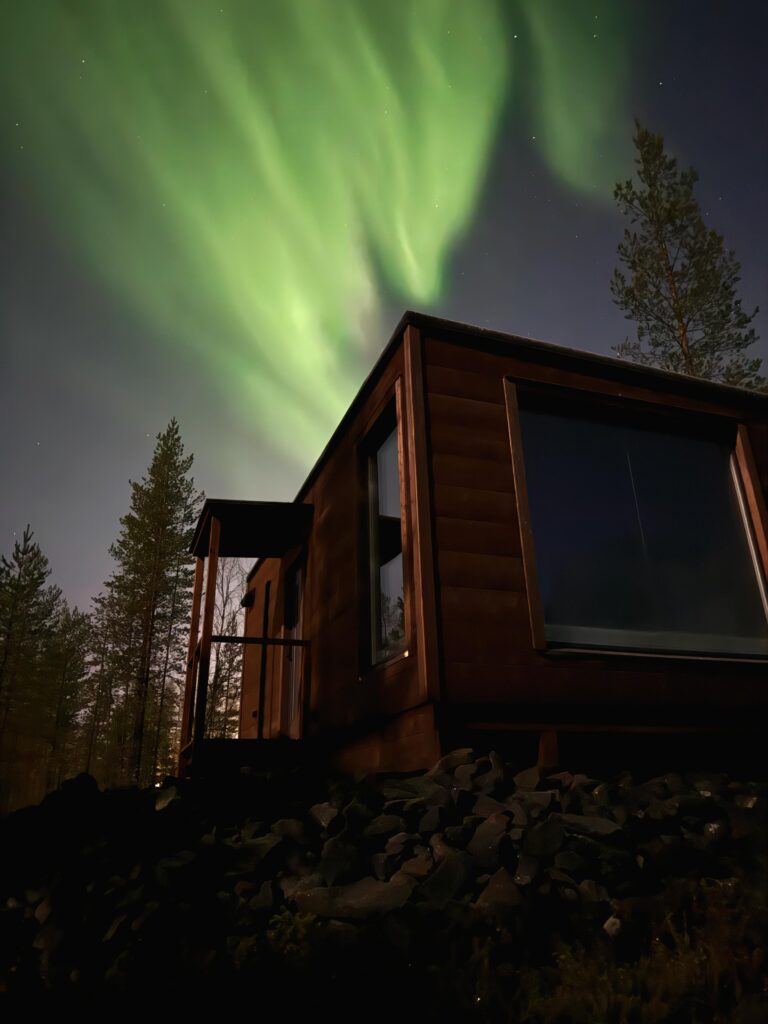
Rovaniemi sits right on the Arctic Circle, in the heart of what aurora scientists call the auroral oval. On a statistically average winter night with clear skies, you have a real chance of seeing the lights — but the window is narrower than most articles admit.
The aurora season in plain numbers
- Season: roughly late August to early April, whenever nights are dark enough.
- Peak months: mid-December through late March, when skies are dark by 4 pm and the sun stays very low.
- Dead period: mid-May to late July, when Rovaniemi has white nights and the sky never gets dark — no aurora is visible, even if a storm is raging above the atmosphere.
- Clear nights in peak season: roughly 40–55% of nights, depending on the month.
The lights themselves happen year-round — the sun doesn’t take a summer break. What changes is whether it’s dark enough to see them, and whether the sky is clear.
Month-by-month: odds of seeing the aurora in Rovaniemi
Based on a decade of cloud-cover data and our own log of the last three winters, here is what you can realistically expect on a 3-night stay.
The honest month-by-month breakdown
- September: dark nights return. Mild weather, reasonable odds, beautiful reflections on unfrozen lakes. Odds on a 3-night trip: 40–55%.
- October: equinox activity tends to boost aurora, but cloud cover is at its worst. Odds: 35–45%.
- November: polar night is starting. Cold, often cloudy, but when it clears you get long dark hours. Odds: 40–50%.
- December: peak polar night and magical for tourism, but cloud cover is high. Odds: 45–55%.
- January: colder, drier, clearer. Our favorite month. Odds: 60–70%.
- February: the sweet spot — clear skies, long dark hours, tolerable cold. Odds: 65–75%.
- March: still dark at night, skies often crystal clear, daytime is bright and pleasant. Odds: 60–70%.
- Early April: the last real aurora window before the sky stays bright too long. Odds: 40–50%.
The best time of night — and how long you should wait
The aurora has a strong diurnal pattern. Locals don’t wait outside from dusk until dawn; we watch the window that actually matters.
The three things that matter most
The single best window is 10 pm to 1 am local time. That’s when Rovaniemi passes under the part of the auroral oval with the strongest activity. If you only have one or two clear nights, plan around this window.
Give your eyes at least 15–20 minutes of full darkness before you decide nothing is happening. A faint green band that looks like a cloud to a new arrival is obvious aurora to fully dark-adapted eyes.
The most common mistake we see is tourists going out at 8 pm, freezing for an hour, and going to bed. The real show often starts after you’ve gone to sleep. Commit to the 10 pm – 1 am window or delay your evening.
A recent iPhone or Pixel in Night mode can pick up aurora that looks like a faint grey band to the naked eye. Use it as a “sensor” first, then enjoy with your eyes.
Winter nights at −25 °C require real layers: wool base, down mid, wind-blocking shell, insulated boots, and hand warmers. Most “we didn’t see anything” trips are really “we went inside too soon” trips.
The single biggest predictor of success isn’t luck — it’s the number of nights you give yourself. 3 nights in peak season gets most travelers at least one clear aurora window.
How to read the forecast: KP index, cloud cover, sun activity
There are three numbers that actually matter. Everything else is noise.
The three numbers
- KP index (0–9): how far south the aurora oval is pushed. In Rovaniemi, anything from KP 1 upward is enough for visible aurora overhead. People obsess over this number. Don’t — at our latitude, clouds are the real enemy.
- Cloud cover (%): check a Finnish-specific forecast like the FMI service. You want under 30% cloud cover. If the first 20 km around Rovaniemi are cloudy, drive to where it’s clear.
- Solar wind / Bz component: when Bz is strongly negative, aurora can surge unexpectedly. Apps like My Aurora Forecast push alerts when this happens.
Our rule: if the cloud map has a clear patch anywhere within a 60 km radius tonight, we’re going. KP is almost always high enough.
Where to go: best aurora spots near Rovaniemi
Light pollution from central Rovaniemi dims faint auroras. For serious viewing, drive 10–30 minutes out. These are the places we send visiting friends.
- Ounasvaara Hill (5 min east of the center): closest dark-enough spot, good view north, easy even without a car.
- Arctic Circle / Santa Claus Village side roads (8 km north): the village itself is bright, but smaller roads behind it get very dark quickly.
- Vikaköngäs / Vika area (25 km north): riverbank, low horizon, one of the reliably darkest spots within 30 minutes.
- Sinettäjärvi lake (20 km west): frozen lake in winter, open horizon in all directions, fantastic for reflections in September/October.
- Pyhätunturi-direction road (45 km+ out): for serious chasers with a flexible night — fewer clouds, bigger skies.
Our biggest aurora-hunting mistakes (so you don’t make them)
- Betting on a single night. Weather can shut down a whole night. 3 nights minimum, ideally 4.
- Staying in the city. Even 10 minutes out makes a big difference for faint auroras.
- Going out too early. 8–9 pm is usually dead; the magic window is 10 pm–1 am.
- Trusting only the KP index. Cloud cover decides more nights than KP does.
- Under-dressing. Cold kills patience, and patience is how you see the lights.
- Dismissing a faint grey band. That’s often exactly what the aurora looks like before it brightens — raise your phone.
Frequently asked questions
What is the single best month to see the northern lights in Rovaniemi?
February. You get very long dark nights, typically clearer skies than December, and cold but manageable temperatures. January and March are close seconds.
Can you see the northern lights from the center of Rovaniemi?
You can see strong auroras from the city center, but light pollution hides weaker displays. Drive 10–20 km outside, or climb Ounasvaara, and you’ll catch far more.
Do I need to book a tour, or can I hunt the aurora on my own?
Both work. If you have a rental car, a warm outfit, and 3 nights, self-hunting is very doable. Tours are worth it if you want a guide who tracks clouds in real time and handles the driving.
What time of night are the lights usually strongest?
Between about 10 pm and 1 am local time. That’s the magnetic-midnight window, when Rovaniemi sits under the most active part of the auroral oval.
Can I see the northern lights in Rovaniemi in summer?
No. From roughly mid-May to late July the sky never gets dark enough, because of the polar day. The lights are physically still happening — you just can’t see them.
Joona & Alla
A Finnish-Ukrainian couple living in Rovaniemi, Finland. Joona is a marketing professional in Lapland tourism; Alla is an AI Engineer. Together we’ve visited 21 countries and share honest, locally-grounded travel writing from our home in the Arctic.
Read our full story →