Car Setup for Long Road Trips: What We Actually Carry After 21 Countries
We’ve been setting up cars for road trips across Finland, Iceland, Norway, the Faroe Islands, and deep into Europe for years. Here’s the honest system we’ve landed on — and the things we stopped carrying.
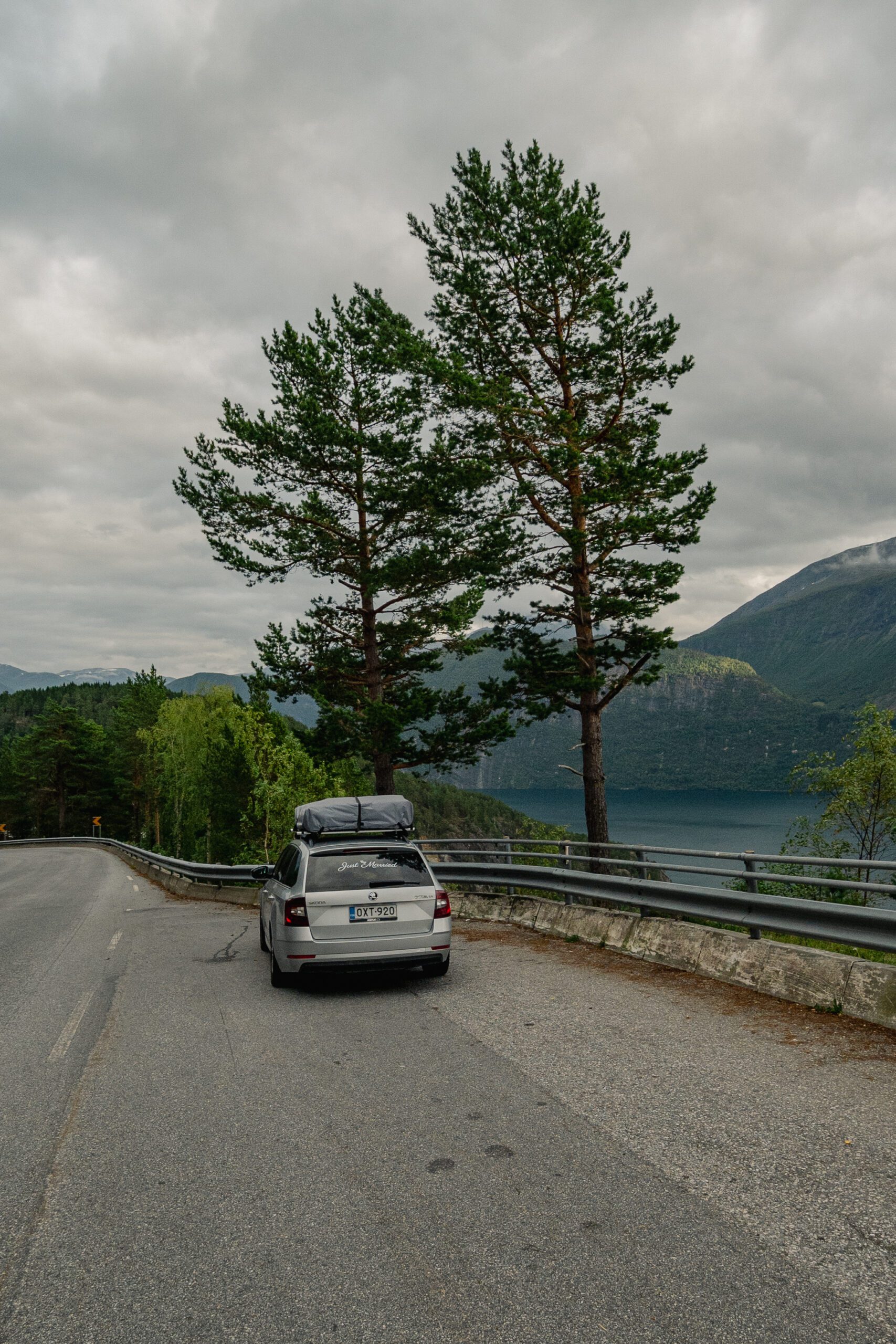
We’ve packed and re-packed our car more times than we can count. Nordic road trips out of Rovaniemi. Iceland’s Ring Road. A month looping through the Faroe Islands on single-track roads. Long hauls down through Scandinavia into Central Europe. Every trip taught us something about what belongs in the car — and what is just dead weight you regret hauling from a ferry parking deck at midnight.
This post is not a “car camping gear list” with forty affiliate links. It’s the actual setup we run after years of learning what works on long roads, in cold climates, with two people, limited space, and a strong preference for not stopping at a supermarket every single day.
A good road trip car setup covers five zones: navigation and power, sleep and rest, food and water, clothing and weather, and tools and safety. The single most important thing is making the system repeatable — so you pack the same way every time and never wonder where the phone charger is when it’s already dark in northern Norway.
The five zones of a long road trip car
The biggest shift for us came when we stopped thinking about “what to pack” and started thinking about zones. A well-set-up road trip car is really five mini-systems working together. When every item has a home, you spend less mental energy on the road — which matters when you’re driving seven hours through Finnish Lapland in February with visibility dropping.
Zone 1 — Driver zone (navigation + power + quick access)
Everything the driver or co-pilot needs without leaving the seat: phone mount, charger cables, sunglasses, snacks, toll change, paper map as backup. If it’s needed in the front two seats, it lives there permanently and nothing else does.
Zone 2 — Sleep and rest zone (if camping or sleeping in the car)
For us, this is the back of the car with our rooftop tent gear close to the hatch. Sleeping bags, pillows, the tent mat, and layers for cold nights are always together in one dry bag. We can set camp in under ten minutes because the zone is always in the same state.
Zone 3 — Food and water zone
A soft cooler or portable fridge (we use a 12V compressor fridge on longer trips), a second bag with dry goods, and a collapsible water container that lives next to the cooler. The rule is simple: food never migrates out of this zone into the driver zone.
Zone 4 — Clothing and weather zone
Accessible without fully unpacking the boot. Rain jackets and a mid-layer always on top. The rest is packed below, in a system where “day clothes” and “sleep clothes” are in separate bags.
Zone 5 — Tools and safety zone
Under the floor or in a fixed corner of the boot, never touched unless needed — but always there. Jump leads, tow strap, first aid kit, headtorch, emergency blanket, warning triangle, tyre inflator. In Lapland this list also includes a snow shovel and an ice scraper as permanent residents from October to April.
Navigation, power, and staying connected
This is the zone that most people underinvest in and then regret at some point on a three-week trip. Power management in a moving car sounds boring until your phone is at 4% on an unmarked Faroese road and you realise the USB port you’ve been using is actually slow-charging.
A dual-port USB-C car charger with PD 65W — one port for the phone on the mount, one for the co-pilot. A short, thick cable matters: cheap cables lose watts at the wrong moment.
We use a magnetic vent mount for quick in-out and a suction cup dash mount as backup. The vent mount is fine in summer; in Nordic winters the vent heat makes it unreliable at −20 °C.
Download the offline map before you leave, not at the petrol station. We download the full country maps in Google Maps and a backup in OsmAnd. Iceland and the Faroes both have dead zones that look connected on the map and aren’t.
For multi-country trips we use an eSIM data plan (we’ve tested Airalo and Holafly) loaded before leaving. Physical SIMs are better value for a single-country three-week trip. Keep both options ready — see our full eSIM guide for Europe for current picks.
A 20,000 mAh power bank lives in the glovebox for emergencies, ferry crossings, and the moments when you park and want to keep a device charged without the engine running. We charge it from the car while driving, not from a wall socket every evening.
Optional, but we’ve had it for three years and it has paid for itself once already on a highway incident in Poland. A basic 1080p front-only cam is enough. It runs off the ignition feed and requires zero attention.
Quick-access gear: the six things we always keep in reach
These six things live in the same spot every trip, accessible from the front seats without opening doors or moving bags. We learned the hard way that anything “in the boot” is effectively unavailable when you’re parked on an Icelandic gravel pull-out with wind at 70 km/h.
- Sunglasses — in the driver’s door pocket, always. Nordic summer sun at midnight over flat tundra is genuinely blinding.
- Snack bag — directly behind the driver, no digging. Nuts, dried fruit, a bar. Refilled at every fuel stop.
- Water bottle per person — in the door pockets. Dedicated spots, never swapped out for other items.
- Headtorch — in the glovebox. Not in the boot with the main gear. When you need a headtorch at 11 pm in a Norwegian campsite, you need it in ten seconds, not after unpacking half the car.
- Wet wipes and tissues — in the central console. Sounds basic. Will save you on the road more times than any other item on this list.
- Car documents and insurance folder — always in the glovebox, in a waterproof zip pouch. Passport copies too, on longer international trips.
Food and water on the road
The food system is where most people’s car setup collapses. A disorganised food zone means you’re stopping every two hours, spending money you didn’t plan to spend, and eating worse than you would at home. We’ve run our food system across 21 countries and it works everywhere from a supermarket in Helsinki to a tiny shop in the Faroe Islands.
The cooler question
For trips under four days, a good soft-sided cooler with real ice blocks works fine. For anything longer, a 12V compressor fridge is transformative. We use ours on all trips over five days. It runs off the car battery while driving and draws very little power when the engine is on. The upfront cost is high; the operational cost is near zero. We eat fresher food, waste less, and stop less.
Dry food bag essentials
- Instant porridge or muesli — quick morning fuel without needing fire or a full cooking setup
- Good coffee (a small stovetop moka pot and pre-ground coffee; filter coffee in Nordic campsites is free but weak)
- Crackers, nut butter, hard cheese — three days of lunches that need no cooking
- Pasta and one sauce packet — emergency dinner if you miss a town
- Protein bars — not glamorous, but three of them in the glovebox have saved a bad day more than once
Water
Finland, Norway, Iceland, and Sweden all have tap water you can drink. We carry a collapsible 5-litre container and a 1.5-litre steel bottle per person. In countries where tap water is less reliable we carry a Sawyer Squeeze filter — it weighs almost nothing and means we’ve never had to buy plastic bottles in three years.
Road trip tips, Nordic life, and honest travel writing
We send a short email every few weeks — no fluff, no sponsored roundups. Just what we’re actually doing and what worked.
Clothing and weather layers for Nordic driving
Packing clothes for a long Nordic road trip is a different problem from packing for a beach holiday. The temperature range in a single day can swing from +22 °C at noon to +4 °C after a rain shower in northern Norway. The Faroe Islands will give you all four seasons in one afternoon. Iceland’s interior can turn from warm hiking weather to horizontal sleet in an hour.
The layering system we pack has not changed in five years:
- Merino wool base layer — one per person, doubles as pyjamas in cold camps. Doesn’t smell after multiple days.
- Mid-layer fleece or down jacket — one per person. Compresses into a stuff sack, lives on top of the clothing bag.
- Hardshell rain jacket — non-negotiable in Scandinavia and the North Atlantic. A good one lasts a decade. We use ours at least fifty days per year.
- Waterproof trousers — optional in summer Finland, mandatory in the Faroe Islands and Iceland.
- Merino hiking socks — six pairs each. They dry overnight and don’t smell. We have not packed cotton hiking socks since 2021.
- Trail shoes and sandals — two footwear options per person. Trail shoes for hiking and wet conditions; sandals or light shoes for town days and camp evenings.
- Warm hat and gloves — live in the front of the clothing bag even in summer. In northern Norway in June you will use them.
Tools, safety, and emergency gear
This is the zone that most road trip guides either skip entirely or expand into a fifty-item survival list. The truth is somewhere in the middle. You don’t need a full mechanic’s toolkit in the boot. You do need to be able to handle the most common problems — and to stay safe if something goes wrong in a remote area.
- Jump starter pack (lithium, 1000A peak): fits in a glove box, starts a dead battery without another car. Essential in Lapland from October to April — cold kills batteries silently overnight.
- Tyre inflator (12V): slow punctures happen on gravel roads in Iceland and Norway constantly. Being able to re-inflate and drive to a tyre shop has saved us twice.
- Tow rope: cheap, light, takes up almost no space. If you get stuck on a Finnish forest road, the only person who can help you is the farmer in the truck coming the other way.
- First aid kit: a proper one, not a travel size. Blister treatment is the most-used item, by far. After that: antiseptic, bandages, paracetamol and ibuprofen, any personal prescriptions.
- Emergency blanket and dry bag: in the boot, sealed. If you have to wait hours in cold weather, these matter.
- Warning triangle: legally required in most European countries. It lives in the boot pocket and never moves.
- Headtorch with spare batteries: the boot headtorch (not the quick-access one in the glovebox) is for sustained use — reading a map, changing a tyre at night, setting up camp.
- Snow shovel and ice scraper (Lapland and Iceland only): permanent residents of our boot October–April. Not optional if you’re driving gravel roads in Finnish Lapland after a snowfall.
What we stopped carrying — and why
This section is what nobody writes but everyone needs. The things that look useful in a gear video and turn out to be dead weight.
- A full set of cooking pots: we cut to one pot, one pan, one spatula. The rest sat in the boot for three weeks on one Iceland trip and never left the bag.
- Physical guidebooks: we carried these for two years. We opened them maybe twice per trip. Offline maps and a downloaded PDF guide are both better.
- A separate “media bag” for cables: all cables now live in one small roll pouch in the glovebox. The separate bag was always under everything else.
- Extra pillows: one good compressible pillow per person. Regular home pillows are enormous, take up half the boot, and are not meaningfully more comfortable for sleep in a tent or reclined seat.
- A portable table: used it twice in three years of camping. Now we eat at campsite tables or on the tailgate.
- Fancy camp towels in multiple sizes: one medium microfibre towel per person. They dry overnight and cover every use case.
Frequently asked questions
What is the most important thing to get right in a long road trip car setup?
Consistency. The same item in the same place every trip. When you stop at a Norwegian viewpoint in the rain and you need the rain jacket immediately, you need to know exactly where it is. A system you can repeat matters more than what specific items you carry.
Do you need a 12V compressor fridge for a Nordic road trip?
Not for short trips under 4–5 days — a quality cooler with ice blocks is fine. For longer trips, especially in Iceland or Lapland where shops are far apart, a compressor fridge is genuinely transformative. It cuts food costs, reduces stops, and means you can carry proper food rather than just snacks and crackers.
How do you keep the car organised over a multi-week trip?
The zone system. Everything returns to its zone at the end of every day — food to the food zone, clothes to the clothing zone, and so on. It takes about ten minutes to reset the car each morning. Without this, the car becomes chaos after about day three.
What safety gear is actually essential for driving in Iceland and Lapland?
Jump starter, tyre inflator, tow rope, first aid kit, and a proper warm layer for each person. In Lapland from October to April, add a snow shovel and ice scraper. In Iceland on gravel roads (F-roads), also carry a map of tyre repair shops on your route — gravel punctures are very common.
How many days of food can you reasonably carry in a road trip car?
With a compressor fridge and a decent dry food bag, easily 5–7 days between major resupply stops. We’ve done 10-day stretches in the Faroe Islands where shops were small and spaced apart. Dry goods and a fridge make this very manageable.
Is it worth carrying a dash cam on European road trips?
We think yes, especially in countries where driver liability rules differ significantly from home. It’s not about paranoia — it’s about having evidence if something goes wrong. A basic 1080p front-facing cam costs very little and requires zero maintenance once installed.
Joona & Alla
A Finnish-Ukrainian couple living in Rovaniemi, Finland. Joona is a marketing professional in Lapland tourism; Alla is an AI Engineer. Together we’ve visited 21 countries and share honest, locally-grounded travel writing from our home in the Arctic.
Read our full story →