Lessons From Long-Distance Travel in the North Atlantic
After driving from Rovaniemi to the Faroe Islands, Iceland, and back — across ferries, mountain roads, and single-track tunnels — here is what long-distance North Atlantic travel actually teaches you.
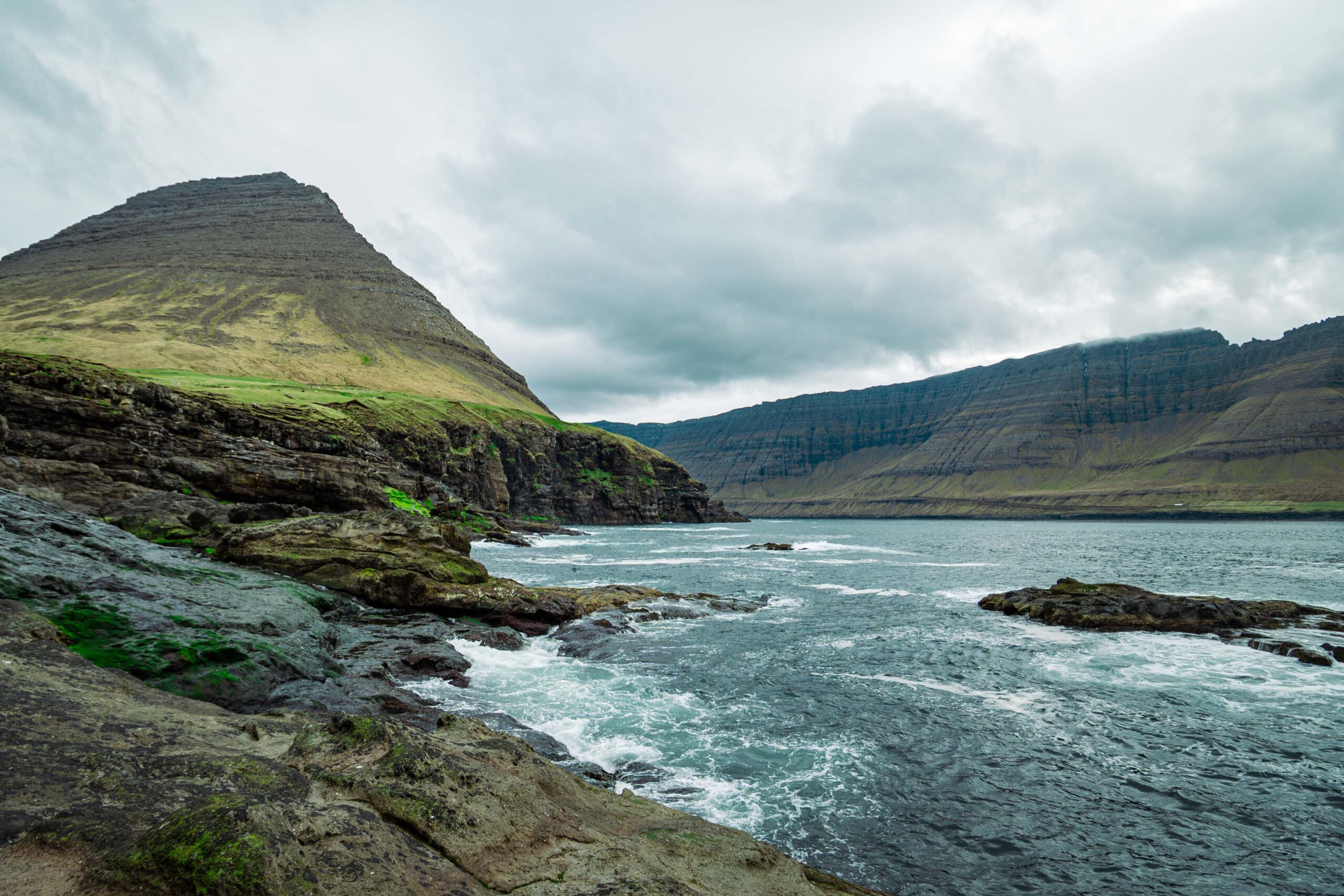
We left Rovaniemi on a grey Tuesday in late September with a rooftop tent, a half-broken satellite tracker, and a ferry ticket to the Faroe Islands booked three weeks earlier on a whim. By the time we came back — via Iceland, the Smyril Line, and a very long drive south through Norway — we had logged more than 6,000 kilometres across roads that had no right to exist, seas that had no interest in behaving, and destinations that had been quietly waiting for us to show up unprepared.
Long-distance travel in the North Atlantic is its own category. It is not a city break with a dramatic backdrop. It punishes under-preparation and over-scheduling in equal measure. Here is everything we learned — the things we wish someone had said to us before we left.
Long-distance North Atlantic travel — the Faroe Islands, Iceland, and the remote Norwegian coast — rewards patience and punishes rigid itineraries. Build in buffer days for weather, prioritise slow travel over checklists, and understand that the ferry, the tunnel, and the mountain road are the experiences, not just the transport between them.
Why long-distance travel in the North Atlantic is different
Most travel advice is written for warm-weather destinations where the biggest obstacle is a queue at a museum. North Atlantic travel — the stretch from northern Norway through the Faroe Islands to Iceland — operates on completely different rules. The distances are real, the weather is genuinely unpredictable, and the infrastructure, while good, assumes you know what you are doing.
Scale is not what the map suggests
On a standard map of Europe, the Faroe Islands look close to the Norwegian coast. They are not. The Smyril Line ferry from Hirtshals, Denmark, takes around 36 hours to reach Tórshavn. Add the drive from northern Finland and you are looking at several days of travel before you arrive anywhere. We knew this intellectually. We did not feel it until we were on the deck of the ferry watching the Danish coast disappear.
- Rovaniemi to Hirtshals (ferry port): roughly 2,400 km by road through Finland and Scandinavia — a comfortable two to three driving days.
- Hirtshals to Tórshavn (Faroe Islands) by Smyril Line: 36 hours at sea, one stop in Seyðisfjörður, Iceland on some routes.
- Tórshavn to Reykjavik by ferry: continuing on the Smyril Line, another 14–16 hours.
- Total time just to arrive in Iceland from Rovaniemi: realistically six to eight days if you stop properly.
The North Atlantic is its own weather system
Finland has four seasons. Lapland has two. The North Atlantic has about seventeen, sometimes in the same afternoon. In the Faroe Islands we experienced horizontal rain, a rainbow, bright sunshine, and thick fog in a single two-hour hike. In Iceland we watched a clear-sky morning turn into a road-closure blizzard by noon in late September. The weather is not an obstacle to North Atlantic travel — it is the texture of it.
Planning the route: what to get right early
We are both planners by instinct — Joona works in travel marketing, Alla has an engineering background. Even we over-planned our first North Atlantic long-haul. Here is what we learned about what actually needs to be booked early and what should be left loose.
Book these early — they sell out
- Smyril Line ferry: the vessel has limited car-deck space. In shoulder season (September–October) it can fill up six to eight weeks ahead. In summer, even earlier. Book as soon as your dates solidify.
- Accommodation in the Faroe Islands: Tórshavn and Gjógv in particular have limited beds. Options on the smaller islands fill fast. Guesthouses often require emailing directly.
- Campsites in Iceland during summer: major sites like Þórsmörk and Landmannalaugar require pre-booking. Arriving without a reservation in July is a real risk.
- Rental car in Iceland if you need a 4WD: good 4WD stock runs short by May. If you are doing highland F-roads, do not leave this to the last minute.
Leave this deliberately loose
- The number of days you spend in each Faroese island beyond Streymoy — let the weather decide.
- Specific hiking days — trail conditions and visibility change hour to hour.
- Day trips in Iceland — you want flexibility to chase clear skies.
- Overnight stops in Norway on the drive down — a two-hour window of golden evening light over a fjord is worth pulling over for.
Book transport and accommodation at the most remote/limited points. Leave everything else flexible. The North Atlantic rewards the traveller who says yes to an unexpected clear afternoon, not the one who has to catch the 4 pm bus.
The ferry is not the boring part
Before we left, we thought of the Smyril Line as necessary travel between two real destinations. Within six hours of leaving Hirtshals, we understood we had got that completely backwards. The ferry crossing is one of the best parts of a North Atlantic journey. Here is the quick-reference breakdown of why — and how to get the most from it.
- Sunset over open ocean: the North Sea and Norwegian Sea sunsets from deck are genuinely extraordinary. Mid-September the light lasts until 9 pm and goes orange-pink for an hour.
- Bird life: puffins, gannets, storm petrels, and fulmars follow the ship across much of the route. Bring binoculars.
- Arrival into Tórshavn: the ferry approaches the Faroe Islands through a narrow gap in the basalt cliffs at dawn. We were on deck at 6 am in the cold. It was one of the most dramatic arrival moments of our travel lives.
- Sleep well: the cabins are genuinely comfortable, not the afterthought you might expect. Book a cabin with a window if you can — the sea light at 5 am is something.
- Food onboard: the restaurant is decent; the buffet breakfast is good value. Buy a small amount of food in Denmark before boarding — snacks between meals are expensive on the ferry.
- The Seyðisfjörður stop (Iceland): if your route includes this small-town fjord stop in Iceland, go ashore even for an hour. The painted rainbow road up to the church is worth it.
- Motion sickness is real: the North Atlantic can be rough. If you are susceptible, take medication before you need it. The first four to six hours out of Hirtshals can be the worst patch.
- Download offline maps and content before boarding: wi-fi is available but limited and slow. Download what you need in port.
Weather: the real itinerary-setter
The single most important mindset shift for North Atlantic long-distance travel is accepting that weather sets the itinerary, not your spreadsheet.
Travel writing that goes deeper
We send occasional letters from Finnish Lapland — honest field notes, seasonal guides, and the things we don’t put on Instagram.
In the Faroe Islands, cloud and fog close the iconic hikes — Trælanípa, Kallur, Slættaratindur — without warning. We arrived at Múlafossur waterfall in Gásadalur on a morning so foggy we could barely see the car bonnet. We came back at 3 pm to full sunshine, completely empty car park, and the best photography conditions we have ever had anywhere. If we had given up and left the island, we would have missed it.
How we handle weather on North Atlantic trips
- Check Faroese weather via weather.fo — the local service is significantly more accurate than international apps for Faroe Island conditions.
- In Iceland, check vegagerdin.is for road conditions and closures before any drive. F-road closures are updated daily in spring/autumn.
- Build one buffer day per three travel days specifically for weather. We call it the “fog day.” It has saved every trip.
- Never leave a good-weather slot idle because your plan says it is a rest day. Rest in the fog, move in the sun.
What we packed wrong — and what we’d change
We have packed for Lapland winters, Singapore humidity, and Greek island heat. The North Atlantic defeated all our confident assumptions.
- We brought too many “nice” clothes. We wore the same three-layer outdoor system on repeat for two weeks. Everything that needed ironing stayed in the bag.
- We under-packed waterproofs. In the Faroe Islands, “waterproof” is not a feature — it is the minimum requirement. Our jackets were fine. Our trousers were not. We bought new ones in Tórshavn.
- We forgot the dry bags. Camera gear, passports, and any paper you want to keep dry need to be in dry bags or waterproof pouches. Always.
- We brought too much food. The Faroe Islands has good supermarkets. Iceland’s supermarkets are more expensive but well-stocked. We did not need to travel with a week’s worth of Finnish rye bread.
- We packed trekking poles late. We added them only for the second half. They are non-negotiable on Faroese coastal paths, which are steep, wet, and grassy. Pack them from day one.
- We did not pack enough charging solutions. A good multi-port USB hub and a high-capacity power bank (minimum 20,000 mAh) are essential. Car charging plus a bank means you are never low.
The slow-travel shift
The most important lesson of long-distance North Atlantic travel is one that cannot be taught in advance. It has to be arrived at, usually around day four, when the urgency to see everything starts to dissolve and you find yourself spending three hours in a small Faroese fishing village not because anything particular is happening there, but because the light is good and the coffee is hot and there is nowhere you absolutely need to be.
We call this the slow-travel shift. It is the moment when the trip stops being a list to complete and starts being the actual experience. North Atlantic travel accelerates this shift because the environment enforces it. You cannot rush a fog. You cannot power through a ferry crossing. The rhythm is set for you.
What slow travel looks like in practice
- Driving the Faroe Islands without a fixed daily endpoint — just a rough area to be in by evening.
- Spending two nights in a small guesthouse in Gjógv instead of one, because the next morning’s fog cleared into something extraordinary.
- Skipping a famous waterfall in Iceland because the road to it was closed and we found a better one by accident three kilometres earlier.
- Cooking dinner at the campsite instead of rushing to a restaurant, because the midnight sun over the fjord was doing something extraordinary and we did not want to be inside.
Mistakes that cost us time and money
- Booking a non-refundable cabin upgrade on the Smyril Line for a route that changed. Always check the cancellation and change policy before upgrading.
- Not pre-ordering the Faroe Islands tunnel passes online. The Vágar submarine tunnel and the Eysturoy tunnel require payment. The app and online system are straightforward — we arrived without having done this and lost 45 minutes sorting it out at the terminal.
- Driving into Reykjavik in rush hour without offline maps. Data roaming works, but the city centre one-way system is non-obvious. Download offline maps before you need them.
- Underestimating Norwegian toll costs on the drive south. The AutoPASS system registers your plate automatically on most Norwegian roads. Without a pre-registered transponder you receive a bill by post (for EU/EEA plates) or a charge to the rental car. Factor in €40–80 in tolls for a full Norway transit.
- Leaving Iceland fuel to the last minute. Petrol stations exist on the Ring Road but they are spaced far apart in the east and north. Fill up whenever you are over half a tank in remote areas.
- Not buying travel insurance that covers weather-related disruptions. A weather-closed road is not a claim. A flight cancellation caused by a volcanic ash event in Iceland is. Know the difference before you leave.
Frequently asked questions
How long does the Smyril Line ferry take from Denmark to the Faroe Islands?
The crossing from Hirtshals, Denmark, to Tórshavn, Faroe Islands, takes approximately 36 hours. Some routes make a stop in Seyðisfjörður, Iceland, adding time. The return journey is similar. Book early — car-deck space sells out well in advance in summer.
Is it better to visit the Faroe Islands before or after Iceland on a North Atlantic trip?
Either works, but we prefer Faroe Islands first. You arrive less tired, and the Faroes’ slower pace is a good introduction to North Atlantic travel rhythms before Iceland’s scale and pace. Iceland tends to feel busier and more organised, which is easier to handle once you have settled into the trip.
Do you need a 4WD for the Faroe Islands?
No — most Faroese roads, including the tunnels and the main inter-island routes, are perfectly manageable in a standard car. Some gravel tracks to trailheads benefit from higher clearance, but a 4WD is not necessary unless you have a very specific off-road plan.
How much does a North Atlantic road and ferry trip cost?
A two-week Faroe Islands and Iceland combined trip for two people, including the Smyril Line ferry, accommodation, food, and local transport, typically runs €4,000–6,500 depending on how you travel and the season. Iceland is the more expensive leg. The Faroe Islands is surprisingly affordable once you arrive.
What is the best time of year for long-distance North Atlantic travel?
June to August for midnight sun, puffins, and accessible hiking. September for fewer crowds and dramatic light. October onwards is possible but the weather is rougher and some highland routes close. We went in late September and consider it the sweet spot for the Faroe Islands in particular.
Can you do this trip without a car?
Partially. The Faroe Islands has a bus network, and you can walk and hike without a car, but some of the best spots are only reachable by vehicle. Iceland is much harder without a car outside of Reykjavik and the Reykjanes Peninsula. If the trip starts from Rovaniemi, you need a car for the Norway drive anyway.
A final word from Rovaniemi
We drove home from Norway into Finland on a Sunday evening in October. Rovaniemi was dark and cold and felt very ordinary after two weeks of basalt cliffs and open ocean. It took about three days for the trip to settle — for the specific memories to separate out from the general feeling of having been somewhere that demanded something from us.
That is what long-distance North Atlantic travel does. It is not the kind of trip you recover from quickly. It gets into you. The scale, the weather, the ferry wake in the grey Atlantic dawn, the way the Faroe Islands cliffs appear out of fog like something from a myth. If you are considering it, our honest answer is: go. But give it time. Not a long weekend. Real time. The North Atlantic is not impressed by a tight itinerary.
We will be back — probably via the same ferry, probably in September again, probably with better waterproof trousers.
Joona & Alla
A Finnish-Ukrainian couple living in Rovaniemi, Finland. Joona is a marketing professional in Lapland tourism; Alla is an AI Engineer. Together we have visited 21 countries and share honest, locally-grounded travel writing from our home in the Arctic.
Read our full story →