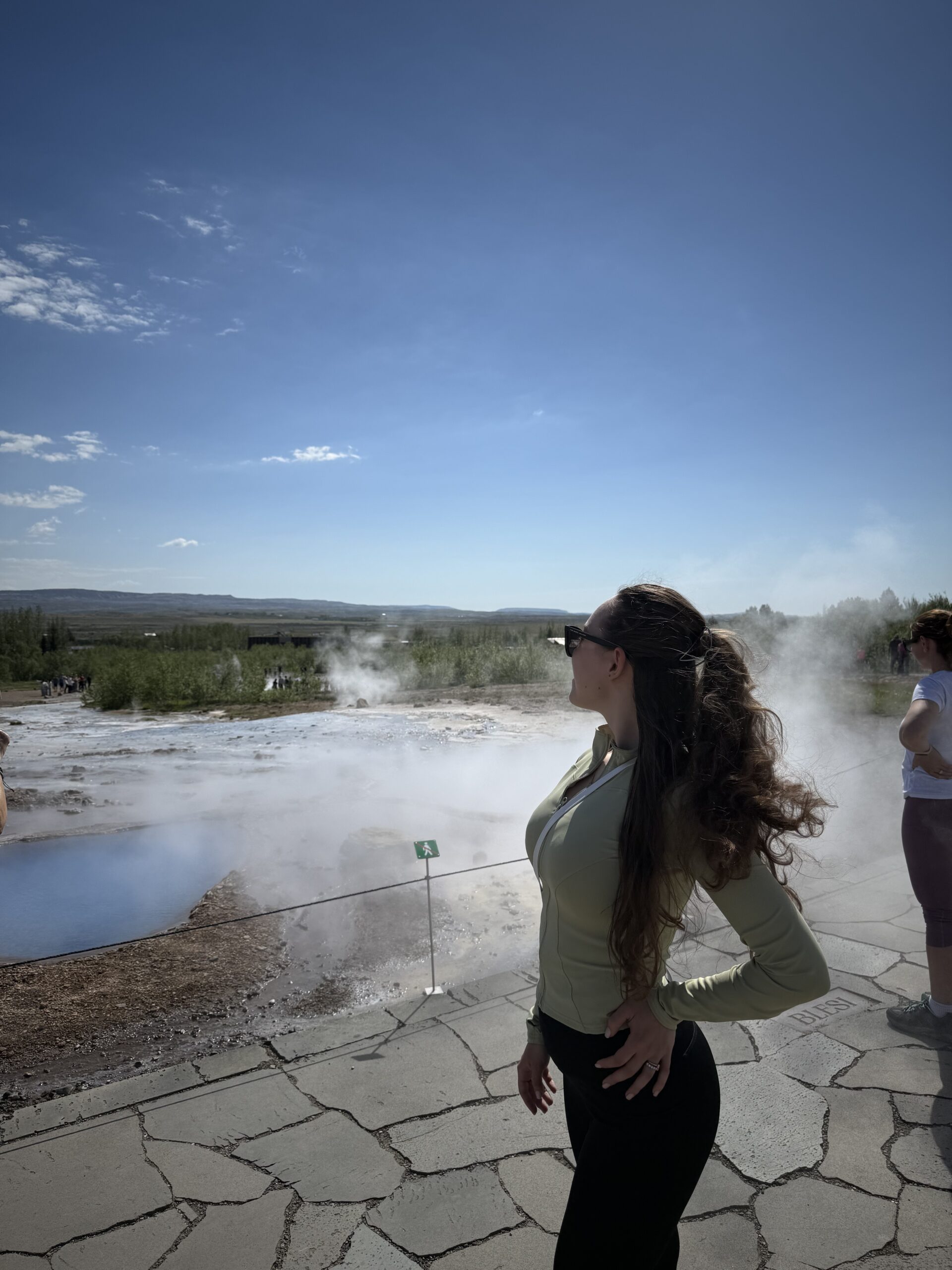
We drove Iceland in cold months before it was common advice to do so. The first time was almost accidental — flights were cheap in October, we were coming off a slow season in Rovaniemi, and we figured a country whose average winter temperature is roughly the same as ours couldn’t be that much of a shock. We were right about the temperature. We were wrong about almost everything else.
Iceland in cold months is a fundamentally different destination from Iceland in summer. The crowds are gone. The light is extraordinary. The roads are sometimes terrifying. And the version of the country you get — raw, dramatic, half the time covered in low cloud and still somehow beautiful — is the one that stays with you longest. This guide is everything we know about traveling Iceland in cold months, from two people who also happen to live in Finnish Lapland and have long stopped being impressed by snow.
Traveling Iceland in cold months (October through March) means fewer crowds, lower prices, and genuinely dramatic scenery — but also unpredictable weather, F-roads that are closed, and days that are very short. It rewards flexibility and punishes rigid itineraries. If you can handle uncertainty and dress properly, it may be the best version of Iceland you’ll ever see.
Why traveling Iceland in cold months is worth it
The honest case for off-season Iceland
Iceland in summer gets approximately two million visitors a year. Iceland in winter gets a fraction of that. That alone changes the experience completely. You can pull over at Seljalandsfoss and be the only person there. You can drive through the Snæfellsnes peninsula with no tour buses in the mirrors. You can eat at Reykjavik restaurants without a reservation.
We’ve done both. Summer Iceland is beautiful and legitimately spectacular. But it’s also crowded at every major stop, priced accordingly, and often feels more like a conveyor belt than a road trip. Cold-month Iceland lets you slow down. The scenery is starker, the experience more personal, and the price difference — on flights, accommodation, rental cars — is often significant.
What you actually gain in the cold months
- Northern lights — Iceland’s auroral oval is excellent. From late August to mid-April, dark skies open the window. Coming from Rovaniemi, we have high standards here; Iceland delivers.
- Empty waterfalls and landmarks — Skógafoss, Seljalandsfoss, the Diamond Beach. All of them are more dramatic without tour groups.
- Snow-covered landscapes — The interior looks completely different under snow. More otherworldly, more cinematic.
- Lower costs — Car rental, accommodation, and flight prices all drop meaningfully in the low season. The saving on a two-week trip can be substantial.
- Genuine isolation — Not performed isolation. Real quiet. On a cold February evening on the Reykjanes Peninsula, you can feel genuinely alone in a volcanic landscape and that is worth something.
Month-by-month breakdown for Iceland cold months travel
October: the shoulder sweet spot
October is our favourite cold-month entry point. The Highland roads (the F-roads) are usually closed by mid-month, but the Ring Road stays open, daylight is still around ten hours, and the weather — while moody — is rarely genuinely dangerous. Aurora season has restarted. Prices have dropped from the summer peak. The landscape has gone golden-brown and dramatic.
The trade-off: expect a lot of cloud. October is one of the cloudier months in Iceland, which means aurora odds are real but not high. Rain is common. Coastal areas can be very windy. Dress for everything.
November through January: full darkness, full drama
November is the entry to real winter Iceland. Days shrink to five or six hours by December. The country settles into a rhythm of short-window sightseeing and long evenings. This is when the experience is most intense — the light when it does appear is extraordinary, but you have to plan your days tightly. Ice on roads becomes a serious factor. Snow tires are mandatory (car rental companies fit them automatically from November 1).
December has the added dimension of Reykjavik at Christmas — genuinely charming, with good food and the city at its most social. January is quieter, colder, and statistically clearer than December. For aurora hunting specifically, January and February are the months locals choose.
February and March: the photographer’s months
February and March represent what we’d call the prime window for cold-month Iceland travel. Days are lengthening again, the snow and ice are still firmly in place, and skies tend to be clearer than earlier winter months. The combination of long-duration golden light, snow-covered landscapes, and reasonable road conditions makes this window exceptional for photography and for pure scenic driving. Prices are still well below summer. Crowds haven’t returned yet. Aurora odds are among the highest of the year.
The cold-month Iceland quick-reference guide
Everything we always check and everything we always tell people before they go — condensed.
- F-roads: closed from roughly mid-October to late June. Do not attempt them in winter regardless of what Google Maps suggests. Fines are steep; getting stuck is dangerous.
- Snow tires: mandatory November 1 to April 15. Car rental companies handle this — you don’t need to ask separately, but confirm your car has them.
- Daylight hours: December in Reykjavik = about 4.5 hours. March = about 12. Plan accordingly. Get up early, drive efficiently, don’t waste daylight sleeping in.
- Road conditions: check road.is before every drive. Colour-coded by severity. Red means dangerous; yellow means caution. We check it obsessively and so should you.
- Weather windows: Iceland’s weather changes fast. A three-day forecast is reliable; a week-long one is not. Book flexible accommodation where possible.
- Petrol stations: outside the Ring Road main corridor, gaps between stations can be 50–80 km in winter. Fill up whenever you see a station in the east and north.
- Car choice: 4WD is strongly recommended, not just legally required for F-roads. A small 2WD can manage the Ring Road in normal conditions, but you lose flexibility and safety margin instantly when a blizzard arrives.
- Aurora apps: My Aurora Forecast for push alerts on KP index. Also watch the Veður (Icelandic Met) wind and cloud maps.
Get our best travel tips in your inbox
Monthly stories from Rovaniemi — Arctic tips, packing lists, and the places we keep coming back to.
What to pack and prepare for cold months in Iceland
Layering is not negotiable
- Base layer — merino wool or synthetic, not cotton. Cotton kills warmth when wet.
- Mid layer — down or fleece. We each carry two: one lighter, one warmer.
- Outer shell — wind- and waterproof. Iceland’s wind is not Finnish wind. It is colder, wetter, and often arrives horizontally.
- Insulated boots — rated to at least −20°C. More than you think you need. Iceland is wet cold, which is harder to manage than the dry Arctic cold we’re used to in Rovaniemi.
- Buff/balaclava — for face protection on exposed coastal walks.
- Hand warmers — disposable ones for photography moments. Essential if you’re stopping at every waterfall.
Gear and practical prep
- Download offline maps — maps.me or Google Maps offline. Signal drops in the interior and on the Snæfellsnes peninsula.
- Portable battery bank — cold kills phone batteries fast. Same lesson from Lapland applies here.
- Carry a shovel — rental companies sometimes include one. If not, buy a cheap one. Digging out of snow is easier than waiting for roadside assistance in February.
- Emergency kit — blanket, snacks, water, torch. Not dramatic precaution — standard winter Iceland driving kit.
Where to go when half the island is closed
The Ring Road stays fully open
Route 1, the Ring Road, is maintained year-round. You can do a full or partial circuit in winter. The south coast — Vík, Skógafoss, Seljalandsfoss, Jökulsárlón — is fully accessible and extraordinary in winter light. The east fjords are quieter than summer but scenic. The north — Akureyri and Lake Mývatn — are worth the drive if you have eight or more days.
The Snæfellsnes Peninsula
One of the best winter day trips or two-night stops from Reykjavik. The glacier, the lava fields, the coastal views — all manageable in winter on paved roads. Arnarstapi and Hellnar are dramatically beautiful under snow. The road around the tip can be icy but is usually open.
Reykjavik itself
Often underestimated in winter. The city has excellent restaurants, a thriving coffee culture, and genuine nightlife. The Blue Lagoon — a cliché in summer — is genuinely magical in a snowstorm. Book it, go early morning, don’t skip it.
The Reykjanes Peninsula
Since the 2021 eruptions began, this area has been geologically extraordinary. Volcanic activity is ongoing — check current alerts before visiting, and understand that some viewpoints open and close depending on the lava field. Even without an active eruption, the landscape is unlike anything else in Europe.
Mistakes we made (and see others make) in Iceland cold months
- Booking non-refundable accommodation on a tight itinerary — weather closes roads with zero notice. Book flexible or at least one night ahead, not two weeks ahead from home.
- Underestimating how short the days are — especially in December. We once planned a four-stop driving day in Iceland in mid-December. By 2 pm it was dark. Two stops was the reality.
- Ignoring road.is — it saved us twice from driving into closed roads. Check it every single morning. It’s in English.
- Trying to drive F-roads — we’ve seen rental cars stuck on gravel that wasn’t an F-road but looked like it might lead somewhere interesting. Don’t improvise in winter Iceland.
- Not building in an extra day — Iceland’s weather has cancelled one planned travel day on every winter trip we’ve done. One weather buffer day is not pessimism; it’s good planning.
- Assuming every stop will be crowd-free — even in winter, the Diamond Beach and Seljalandsfoss get busy on good-weather days. Tour buses still run. Go early or late.
Frequently asked questions about Iceland cold months travel
Is Iceland safe to visit in winter?
Yes, with the right preparation. The Ring Road is maintained year-round, rental cars come with snow tires from November, and Iceland has excellent emergency services. The risks come from underestimating weather, attempting F-roads in winter, or driving when road.is says conditions are dangerous. Treat the warnings seriously and the country is very manageable.
What months count as “cold months” in Iceland?
Roughly October through March. October is transitional (shoulder season), November to January is deep winter with very short days, February and March are winter-to-spring with improving light and excellent aurora windows. All of these months have lower prices, fewer crowds, and snow and ice to varying degrees.
Can I do the Ring Road in winter?
Yes. Route 1 is kept open year-round. You should have a 4WD or AWD vehicle, check road.is every morning, carry emergency supplies, and have a flexible itinerary. The south coast and north are fully drivable. The interior F-roads are closed — those are a separate category entirely.
Do I need 4WD for winter Iceland?
Strongly recommended. A 2WD with snow tires will manage the Ring Road in normal conditions, but it leaves you with no margin when a blizzard arrives or you’re trying to park on an icy slope. 4WD is inexpensive to upgrade to relative to the cost of a recovery operation. Get it.
Are the northern lights guaranteed in winter Iceland?
No. You need dark skies (mid-August to mid-April), clear skies, and some solar activity. Iceland’s cloud cover can ruin multiple nights in a row. Plan for at least 4–5 nights and stay flexible on where you sleep so you can chase clear patches. January and February have the best odds statistically.
Is Iceland cheaper in cold months?
Significantly. Flights from European hubs can be 30–50% lower than July peaks. Car rental prices drop considerably. Accommodation, especially outside Reykjavik, is meaningfully cheaper. Budget travelers who can handle variable weather can get excellent value on a cold-month Iceland trip.
A final word from Rovaniemi
We live above the Arctic Circle. We know what cold looks like, and what it does to a landscape, and what it asks of you. Iceland in cold months asks something similar: patience, flexibility, the willingness to change plans when the weather decides otherwise, and the ability to find beauty in something bleak.
The Iceland we love most isn’t the one on the summer brochures. It’s the one at 4 pm in January when the light turns completely gold for thirty minutes and then disappears. It’s the one at 2 am in February when the aurora comes out between cloud breaks and you’re standing by a frozen waterfall in a place you almost didn’t stop. It’s the one that most people haven’t seen, because most people went in July.
If you’re willing to go in the cold months, we genuinely think you’ll prefer it. And we’ll be curious what you think when you come back.
Joona & Alla
A Finnish-Ukrainian couple living in Rovaniemi, Finland — right on the Arctic Circle. Joona works in marketing for Lapland tourism; Alla is an AI engineer. Together we’ve visited 21 countries and write honest, locally-grounded travel content from our home in the Arctic.
Read our full story →