Driving in Finland for the First Time: 10 Things That Surprised Us
We live on the Arctic Circle in Rovaniemi. Before that, we drove Finland’s roads as visitors — and we quickly discovered that driving in Finland for the first time comes with a handful of surprises nobody puts in the guidebook. Here’s what we wish we’d known.
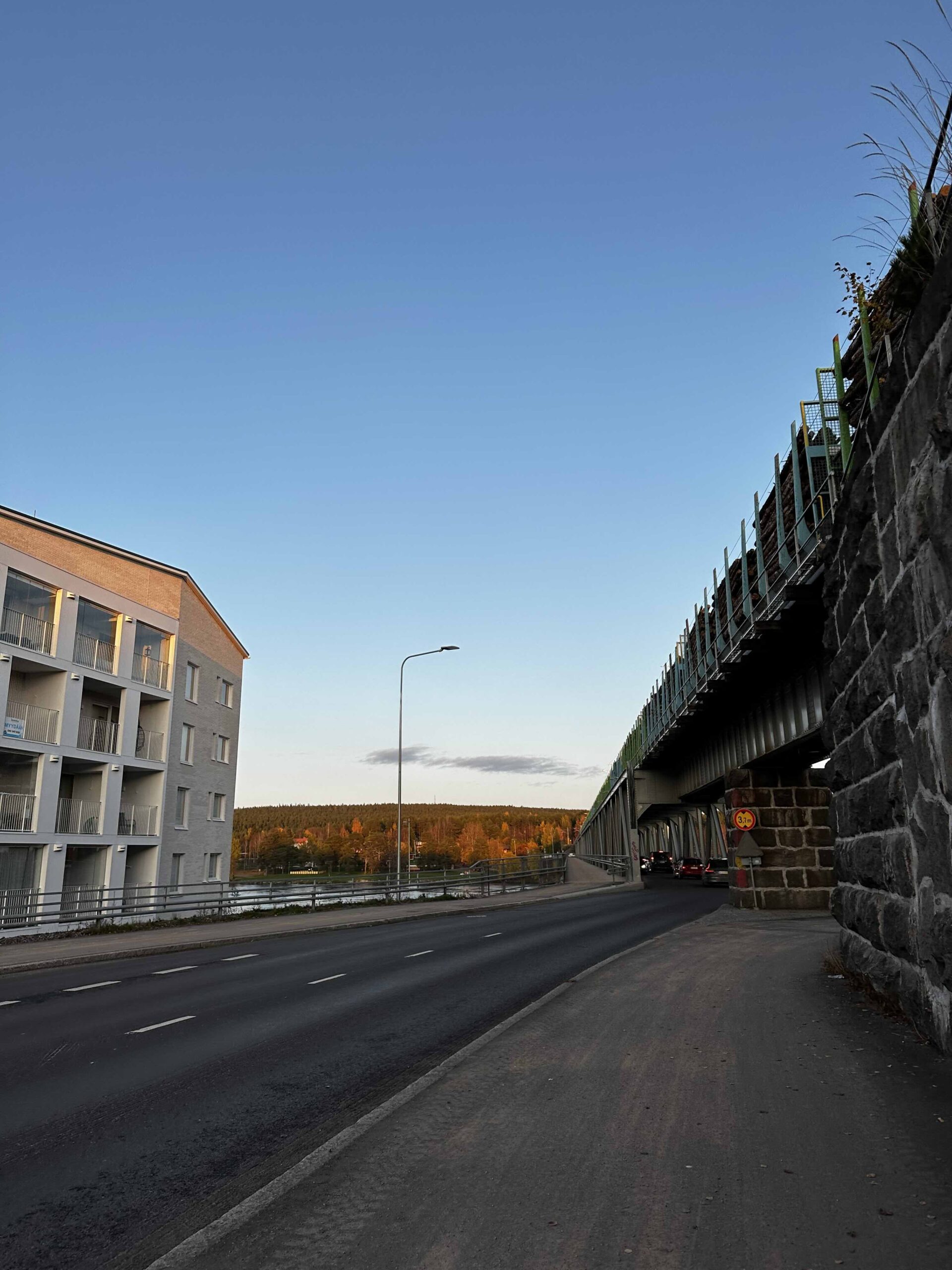
We have driven roads in 21 countries. Finland is our home — Joona grew up here, and after years of living in Rovaniemi together, these roads feel as familiar as our own street. But we remember clearly the first time Alla drove in Finland as a visitor, and the things that quietly caught her off guard. And we hear the same questions from every travelling friend who rents a car here for the first time.
Driving in Finland for the first time is genuinely easy by international standards. The roads are well-maintained, the signage is clear, and Finnish drivers are calm and disciplined. But there are a handful of things — some practical, some cultural, a couple completely unexpected — that nobody seems to mention until you’ve already encountered them. This guide is all of those things in one place.
Driving in Finland for the first time is straightforward, but there are real surprises: moose are a genuine road hazard, speed limits drop frequently and cameras enforce them, there are no road tolls anywhere, and the distances between petrol stations in Lapland are longer than you expect. Read the elk warning signs seriously, fill your tank when you can, and enjoy one of the quietest, most beautiful drives in Europe.
Road rules that catch first-timers out
Finnish traffic law is well-designed and mostly intuitive, but a few specific rules trip up visitors who assume it works exactly like driving at home.
Headlights on at all times, year-round
In Finland, you are legally required to drive with your headlights on at all times — not just at night, not just in rain, but always. Modern cars with daytime running lights (DRL) satisfy this requirement automatically, but if you’re renting an older car or one where DRLs only illuminate the front, double-check that your rear lights are also on. Getting this wrong won’t usually end in a fine, but Finnish drivers will notice and may flash you.
Roundabout priority and the give-way rule
At Finnish roundabouts, traffic already inside the roundabout has priority — exactly the same as most of Europe. What surprises some North American and Asian visitors is that this is enforced strictly and Finnish drivers don’t usually wave you in out of courtesy. Wait for a gap, enter when it’s clear, and don’t expect a friendly wave to substitute for right of way.
- No road tolls, anywhere in Finland. This genuinely surprises most visitors. Unlike Norway or Sweden (where Stockholm and Gothenburg have congestion charges), Finland has zero tolls on any road. Drive from Helsinki to the Norwegian border without paying a single toll fee.
- Trams in Helsinki have strict right of way. If you’re driving in the capital, be very aware of tram tracks and tram stops. Passengers boarding and alighting at tram stops have right of way, and Finnish tram drivers will not stop for a car that is in the wrong position.
- Winter tyres are mandatory from approximately November to March when conditions require them. By law, if there is snow or ice on the road, you must have winter tyres. Rental companies will fit these automatically in season — always confirm at pickup.
- Mobile phone use while driving is illegal unless hands-free. This is enforced and fines are meaningful in Finland (Finnish fines are income-based — high earners can receive four-figure penalties for the same offence that costs a lower-income driver much less).
Wildlife on Finnish roads — this is serious
This is the section we want you to read carefully. Finland has one of the highest rates of wildlife-vehicle collisions in Europe, and the animals involved are not small.
Moose (hirvi) are the real danger
A Finnish moose weighs between 300 and 600 kilograms. An adult stands taller than the roof of a standard car. When a moose is struck by a vehicle, the legs are hit first, and the entire body mass falls through the windscreen — which is almost always fatal for the car’s occupants. This is not a theoretical risk. Finland records thousands of moose-vehicle collisions every year, with a meaningful number of fatalities.
The yellow warning signs showing a moose silhouette are not decorative. When you see them:
- Slow down by 10–20 km/h, especially at dawn, dusk, and night. These are peak moose-activity hours.
- Watch the roadside verges, not just the road surface. Moose often emerge from forest at full walking speed without pausing at the roadside. By the time you see the animal, you may have very little time.
- If a moose appears, do not swerve into oncoming traffic. Brake firmly and try to reduce the impact. If a collision is unavoidable, it is almost always better to hit the moose than to swerve and hit a tree or another vehicle.
- After a collision, call 112 (the Finnish emergency number) and then call police. You are required by Finnish law to report a wildlife collision.
Reindeer in Lapland
North of roughly Oulu, you will see reindeer on and near roads. They are semi-domesticated and belong to local herders. Unlike moose, reindeer are smaller — but they are also completely unpredictable and will stand in the middle of a road with apparent indifference to your car. Slow down, let them move at their own pace, and never honk aggressively. The reindeer herder whose animal you hit will have a legal claim against you.
Related read Planning to road trip further across the Nordics? Our guide on How to Road Trip Scandinavia covers cross-border rules, ferry logistics, and the Norway toll system in detail.
Quick-reference: Finland driving cheat sheet
Speed limits in Finland are set conservatively, enforced consistently, and Finnish drivers follow them. Here is everything you need to know at a glance before you get behind the wheel — from limits and cameras to alcohol rules and emergency numbers.
Urban areas: 50 km/h unless signed otherwise (often 30–40 km/h in residential zones). Main roads: 80 km/h in winter, 100 km/h in summer. Motorways (moottoritie): 120 km/h in summer, 100 km/h in winter. Summer/winter limits change automatically on 1 November and 1 April on major routes.
Finland uses both fixed point cameras and average-speed camera sections (nopeuden pistekamera / välikameravalvonta). The average-speed sections measure your average speed between two points several kilometres apart — you cannot speed up between cameras and slow down at them. Signs warn you when you are entering a monitored section.
None. Finland has no road tolls on any road, including motorways, tunnels, or bridges. Budget zero for toll costs anywhere in the country.
0.5 mg/ml blood alcohol (BAC 0.05%). This is stricter than the UK (0.08%) and similar to most of continental Europe. Random breathalyser checks happen regularly on Finnish roads — especially on Friday and Saturday nights near towns.
112 for all emergencies. Works across the EU and is reachable from any mobile phone even without a SIM or signal on most networks. In remote Lapland, coverage can be patchy — if you lose mobile signal, drive to higher ground.
Most Finnish rental cars are manual in economy categories. If you need automatic, book it explicitly. Winter tyres are mandatory from November through March — reputable companies fit them automatically but confirm at pickup. Cross-border travel to Sweden and Norway is usually allowed within Nordic agreements, but always verify with your rental company in writing.
Local knowledge, direct from the Arctic
Monthly dispatches on Finnish and Nordic travel — the roads, the seasons, the things worth slowing down for. No filler.
Fuel, EVs, and the Lapland distance reality
Finland has no road tolls, which is wonderful. What it does have in the north is long stretches of beautiful nothingness between fuel stops, and this catches visitors out more than almost anything else.
- In southern Finland, fuel stations are plentiful. On the E18 between Helsinki and Turku, or in the Helsinki metro area, you are never far from a station. The same goes for most of the main E-road network in central Finland.
- North of Oulu, the gaps get serious. On some northern routes in Lapland, petrol stations can be 80–120 km apart. Several are unmanned self-service stations that require a Finnish bank card or PIN-enabled foreign card to operate. Visa and Mastercard work at most, but some rural stations still only accept Finnish cards — use staffed stations where possible.
- Petrol in Finland is cheaper than in Norway and Sweden, which makes it an excellent country to fill up before crossing into Norway. If you’re heading towards Kilpisjärvi or into northern Norway, fill to the brim at the last major Finnish town.
- EV infrastructure is developing rapidly in southern and central Finland. In Lapland, EV charging networks exist in the main towns (Rovaniemi, Kemijärvi, Sodankylä, Ivalo) but gaps remain on smaller routes. Apps like Plugshare and Virta are the most reliable way to check live charger availability.
- The ABC chain is your friend. ABC service stations are highway stops combining fuel, a reasonable restaurant, and often a supermarket. They are staffed, accept all standard cards, and are distributed sensibly across the Finnish road network. When you see an ABC sign, consider stopping.
Seasonal road conditions month by month
Finland’s driving experience changes dramatically with the season. This isn’t a minor variation — the same road in July and in January can feel like a different country entirely.
- June–August (summer): the easiest time to drive Finland. Roads are dry, days are endless (midnight sun above the Arctic Circle from June through mid-July), and all routes are open. Wildlife activity is high in the long evenings — be vigilant around dawn and dusk, which in June in Lapland can mean 11 pm.
- September–October (ruska / autumn): arguably the most beautiful driving season. Lapland turns gold, red, and copper in September. Roads are clear but nights begin to cool and early frost is possible from mid-October. Excellent wildlife photography conditions. Drive with daylight where you can.
- November–March (winter): winter tyres mandatory. Roads are maintained well — Finland has extensive snow ploughing and salting infrastructure — but driving on compacted snow and ice requires adaptation. Finnish drivers do this confidently every day, and they expect visitors to also proceed sensibly. If you are not used to winter driving, go slow, leave large following distances, and never brake hard on ice. Early darkness (it can be dark by 3 pm in December in Rovaniemi) significantly extends the moose-risk window.
- April–May (spring thaw): some gravel roads in Lapland become soft and rut-prone during the spring melt (kelirikko). Heavy vehicle restrictions are placed on weight-bearing capacity of rural roads. For a standard rental car this is rarely an issue, but very remote forest tracks may be temporarily impassable.
Useful companion If you’re planning a driving holiday with a specific route in mind, our How to Road Trip Finland in 10 Days guide maps a full local route from Helsinki north to Lapland and back, written from our home in Rovaniemi.
Mistakes we made — and see visitors make all the time
- Underestimating Lapland distances. We once drove from Rovaniemi to Kilpisjärvi — about 480 km — thinking it would be a relaxed four-hour drive. It took nearly six because of the road conditions, reindeer crossings, and the fact that we stopped for photos about thirty times. Plan Finnish Lapland driving at an average of 70–80 km/h actual progress, not the posted 80–100 km/h.
- Ignoring the fuel gauge in the north. Our first autumn in Rovaniemi, we drove out towards Saariselkä and noticed the tank was getting low. The next open station was 60 km away. We made it — but it was a close thing, and it was a Sunday evening when many rural stations were closed or self-service only.
- Driving in the midnight sun without stopping. The constant light creates a strange psychological state where you feel like it’s still afternoon when it’s actually past midnight. Alla once drove two hours longer than she intended because her body clock simply didn’t register the time. Set a hard stop hour based on the clock, not the sky.
- Not checking road conditions before heading into winter Lapland. The Finnish Road Administration (Väylävirasto) and Liikennesää website provide real-time road condition information in English. In winter, a route marked “slippery in places” on the map can mean genuinely challenging driving. We check it every time now before leaving Rovaniemi on a long drive.
- Stopping on the main road to photograph reindeer. On the E75 through Lapland, pulling over partially on the road to get a photo of a reindeer herd is both dangerous and illegal. Use official lay-bys or parking areas. Finnish drivers move fast on open roads and expect the lanes to be clear.
- Assuming gravel roads are like gravel roads elsewhere. Finland has a large proportion of gravel and forest roads, especially north of Rovaniemi. Finnish gravel roads are generally well-graded and driveable in a standard car, but the loose surface means braking distances are longer. Slow down before corners, not on them.
Frequently asked questions about driving in Finland for the first time
Do I need an international driving licence to drive in Finland?
No, if you hold an EU/EEA driving licence or a licence from most major English-speaking countries (UK, US, Canada, Australia, New Zealand). Finland accepts these directly. If your licence is not in the Latin alphabet — for example Japanese, Korean, Chinese, or Arabic script — you will need an International Driving Permit alongside your national licence. Get the IDP before you leave home; Finnish authorities don’t issue them to foreign visitors.
Is it safe to drive in Finland in winter?
Yes, with the right car and the right expectations. Finnish roads are maintained to a high standard through the winter, with regular ploughing and sanding. The key requirement is winter tyres, which rental companies will fit automatically from November onwards. If you are not used to driving on snow and ice, take 20–30 minutes on a quiet snowy car park to feel how the car behaves before committing to a long highway drive. Finnish roads in winter are manageable — but they require respect.
Are there road tolls in Finland?
No. Finland has no road tolls anywhere in the country — no motorway tolls, no tunnel fees, no bridge charges, and no city congestion charges. This is one of the most pleasant surprises for visitors arriving from Norway or Sweden. Budget zero for toll costs during your entire Finnish drive.
What side of the road do Finnish drivers drive on?
The right side, same as most of continental Europe. If you are arriving from the UK, Ireland, or countries that drive on the left, you will need to adjust. The most dangerous moments are when turning out of a car park or a side road onto an empty road — it’s easy to momentarily revert to the wrong side when there is no oncoming traffic to orient you. Take it slowly at junctions until the habit settles.
How serious is the moose hazard on Finnish roads?
Very serious. Finland records between 3,000 and 4,500 moose-vehicle collisions per year. An adult moose can weigh 500 kg and stands higher than most car roofs, which makes a collision at highway speed potentially fatal. The yellow moose warning signs on Finnish roads mark genuinely high-risk zones, typically where forest corridors meet road. Slow down, use high beams on unlit rural roads, and scan the verges — moose often stand still in dark areas and are difficult to see until they move.
Can I rent a car in Finland and drive into Norway or Sweden?
Usually yes, but you must declare this when booking and at pickup, and the rental agreement must specifically allow cross-border travel. Most major companies — Hertz, Avis, Europcar, Sixt — permit Nordic cross-border travel with prior approval. Smaller local companies may restrict you to Finland only. Always get written confirmation. If you cross into Norway, be aware that toll roads apply immediately — AutoPASS is the system to register with in advance to avoid high admin fees from your rental company later.
A final word from Rovaniemi
Driving in Finland for the first time is one of the genuinely great road experiences in Europe. The roads are quiet, well-maintained, and honest — they take you through birch forests, across frozen marshland, along river valleys and up into the fell country of Lapland without demanding anything complicated of you beyond paying attention and respecting the wildlife that shares the road.
The things that surprise first-time visitors — the no-toll system, the moose hazard, the distances in the north, the way the midnight sun plays tricks on your sense of time — are not obstacles. Once you know about them, they become part of what makes driving here unlike anywhere else. You end up slower, more present, and more aware of where you are than you would be on a motorway in France or Germany.
If you have a specific question about a route, a road condition, or whether the E75 north of Rovaniemi is driveable in the season you’re travelling, drop us a message. We drive these roads regularly, and we’re happy to help.
Joona & Alla
A Finnish-Ukrainian couple living in Rovaniemi, Finland. Joona is Head of Marketing at Stay Lapland; Alla is an AI Engineer and content specialist. Together we’ve visited 21 countries and share honest, locally-grounded travel writing from our home on the Arctic Circle.
Read our full story →