Is Helsinki Worth Visiting? A Local’s Honest 48-Hour Guide
We live 8 hours north of Helsinki — and we still come back. Here’s an honest, local-informed breakdown of what’s worth it, what’s not, and how to do 48 hours right.
We’ve planned more than a hundred trips from our home in Finnish Lapland — some for clients, some for weekend road trips across Norway, and more recently a lot of them chasing the aurora across Finnish Lapland. After years of winter chasing a year, we want to share what actually works, what breaks, and the exact prompts we use.
This is not a “10 ways AI will change travel” think-piece. It’s the workflow we use ourselves.
Yes — Helsinki is worth visiting, even for just 48 hours. It’s compact, walkable, genuinely beautiful in every season, and has a food and design scene that surprises most visitors. As Finns who know the country well, we’d rank it among Europe’s most underrated short-break cities.
- Why Helsinki Surprises Most Visitors
- Day 1 Morning: Market Square & the Waterfront
- Day 1 Afternoon: Design District & Temppeliaukio
- Day 1 Evening: Where Locals Actually Eat
- Day 2 Morning: Suomenlinna Sea Fortress
- Day 2 Afternoon: Kallio — Helsinki’s Cool Neighbourhood
- Honest Verdict: Is Helsinki Worth It?
Why Helsinki Surprises Most Visitors
Most people treat Helsinki as a transit stop on the way to Lapland, or skip Finland altogether for Stockholm or Copenhagen. That’s a mistake we hear often, and one we used to quietly agree with — until we started bringing friends here and watching their faces change.
Helsinki isn’t loud about itself. There are no grand boulevards, no ancient citadels, no single unmissable icon. What it has instead is a quiet confidence: beautiful neoclassical architecture sitting next to brutalist concrete, world-class design culture woven into everyday objects, and a food scene that went from boiled potatoes to Nordic fine dining in about 15 years.
As Finns, Joona grew up visiting Helsinki for school trips and work. What strikes us every time is how liveable it feels. The trams are silent and on time. The parks are enormous and actually used. People queue politely and mean it. The sea is everywhere — Helsinki has over 300 islands in its archipelago, and that maritime identity shapes everything from the food to the light.
For a 48-hour visit, you can see the essential Helsinki without a car, without rushing, and without spending a fortune. This guide is how we’d do it for a friend arriving Friday evening and leaving Sunday.
Day 1 Morning: Market Square & the Waterfront
Start at Kauppatori — the Market Square — which sits right at the harbour and is the most honest introduction to Helsinki you can get. It’s touristy, yes, but in a good way: wooden stalls selling fresh salmon, cloudberry jam, reindeer pelts, and handmade wool socks. In summer the square is full of locals buying lunch. In winter it’s quieter but hauntingly beautiful with the frozen harbour behind it.
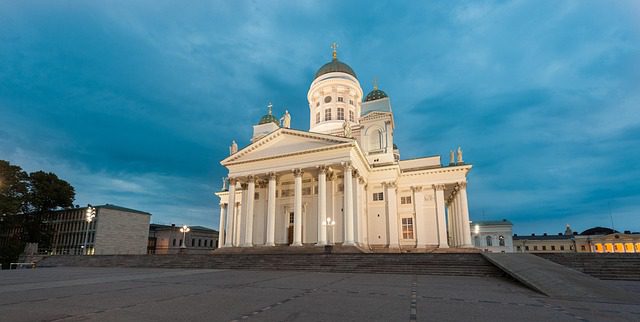
Walk north toward Senate Square to see the white Helsinki Cathedral, which looks exactly like every postcard of Finland. It’s free to enter and the interior is surprisingly minimalist — Lutheran restraint at its finest. The square itself is worth sitting on for a while. The neoclassical buildings around it were designed by Carl Ludwig Engel in the early 19th century and give Helsinki a gravitas that bigger Scandinavian cities don’t always have.
From there, cut through the Old Market Hall (Vanha Kauppahalli) on the waterfront. It’s been a covered food market since 1888, and while prices are tourist-adjusted, the quality is genuinely good. We recommend the smoked fish stall near the back entrance and the Finnish pastry counter with karjalanpiirakka — rye pastries filled with rice porridge that taste nothing like anything else in Europe.
By mid-morning you’ll have covered the harbour district in about two hours without rushing. This is the photogenic Helsinki you’ve seen online, and it earns those photos.

Day 1 Afternoon: Design District & Temppeliaukio
After lunch, walk south-west into the Design District — a compact grid of streets between Esplanadi and Punavuori that contains Helsinki’s best independent shops, galleries, and studios. It’s signposted with a small black ‘D’ in a circle on doors. Not everything is worth entering, but the concentration of Finnish design — Marimekko prints, Iittala glass, Artek furniture — gives you a real sense of what Finnish aesthetics look like when they’re not filtered for airport duty-free.
The Design Museum of Helsinki is here and worth 45 minutes if design history interests you. The permanent collection covers Finnish design from 1850 to now, and the rotating exhibitions are usually excellent. Entry is around €15. Skip it if you’re short on time and just walk the streets instead.
The unmissable stop of the afternoon is Temppeliaukio Church — the ‘Rock Church’ — about 15 minutes’ walk north-west. It was blasted directly into solid granite bedrock in 1969, and the interior is unlike any church you’ve ever been in: rough stone walls, a copper disc roof with 180 windows, and acoustics that make it a world-famous concert venue. Entry is €5. Go around 14:00 when tourist buses are between rotations.
If you have energy left, walk 10 minutes east to Sibelius Monument in Sibelius Park — a sculpture of 600 steel pipes welded together in an abstract wave. It’s strange and impressive, and the park is quiet enough to sit in without feeling like you’re performing tourism.
Day 1 Evening: Where Locals Actually Eat
Helsinki’s food scene has transformed dramatically since 2010. The city now has more Michelin-starred restaurants per capita than most Nordic cities, but the more interesting story is what’s happening at mid-range: market halls, neighbourhood wine bars, and wood-fired pizza places that were unthinkable in Finland 15 years ago.
For a weeknight dinner that feels local without being precious, we’d go to the Hietalahti Market Hall in Punavuori. It reopened in 2020 as a food hall with a mix of Finnish and international vendors, and in the evening it fills with young Helsinki residents eating ramen, natural wine, and open sandwiches in equal measure. No reservations, no dress code, genuinely great atmosphere.
If you want a proper sit-down dinner, Ora in Punavuori is a tasting-menu restaurant that does what Finnish fine dining does best: sourcing from archipelago fishermen and Lapland farmers and turning it into something architecturally beautiful on the plate. Book at least a week ahead. It’s not cheap (around €85 per person for the menu) but it’s the best argument for Finnish cuisine you’ll find in 48 hours.
For a more casual evening: Kallio neighbourhood (which we cover tomorrow) has better bars. But if you’re staying central, the streets around Annankatu have wine bars and craft beer spots that are full of Helsinki residents on a Friday or Saturday night, with none of the tourist pressure you’d feel in the harbour area.
Day 2 Morning: Suomenlinna Sea Fortress
Suomenlinna is the single most important thing you can do in Helsinki and it’s almost criminally underrated outside Finland. It’s a UNESCO World Heritage Site: an 18th-century sea fortress built across six interconnected islands in Helsinki harbour, 15 minutes by ferry from the Market Square.
The ferry runs every 20–30 minutes from Kauppatori, costs the same as a regular Helsinki tram ticket (€3.10), and is used daily by the 800 people who actually live on the islands. That everyday quality is part of what makes it special. The islands have a museum, a submarine you can walk through, a brewery, three restaurants, and about 8km of coastal paths with cannon batteries, stone archways, and views back toward Helsinki that justify the trip on their own.
Plan for 2.5–3 hours minimum. We’d take the 9:30 ferry to avoid weekend crowds, walk the southern islands first (the most dramatic fortifications), have coffee at Cafe Chapman inside one of the fortress buildings, and catch a later ferry back. The islands are quiet in a way that central Helsinki never quite manages, and the ferry ride itself — through the archipelago with the city receding behind you — is the best 15 minutes you’ll spend in Finland that doesn’t involve a sauna.
If you visit in winter, Suomenlinna is even more atmospheric. The snow covers the ramparts, you’re almost alone on the paths, and the light is extraordinary — but dress for -10C and wind chill from the sea.
Day 2 Afternoon: Kallio — Helsinki’s Cool Neighbourhood
After Suomenlinna, take the tram north to Kallio — Helsinki’s working-class neighbourhood turned creative hub. It’s been Helsinki’s coolest area for about a decade and still hasn’t fully tipped into self-parody the way some gentrified European neighbourhoods do.
The main street is Fleminginkatu and the surrounding grid. You’ll find independent coffee shops, second-hand stores, natural wine bars, and a strong concentration of Helsinki’s queer community. The Hakaniemi Market Hall at the southern edge of Kallio is good for lunch: two floors of food vendors, Finnish deli counters, and a top floor with hot food including some of the best vendace (small freshwater fish) you’ll find in the city.
Walk north to Vallila if you want to see Helsinki’s wooden house district — a quiet area of early 20th-century coloured timber houses that look nothing like the rest of the city. It’s a 20-minute walk and the contrast with the stone neoclassicism of the centre is striking. Not many visitors make it here, which is exactly the point.
By late afternoon, circle back through Kallio for a beer at one of the neighbourhood bars. Locals’ recommendation: Ravintola Kivi on Fleminginkatu, which is a no-nonsense Finnish bar that hasn’t changed much since the 1990s and serves cold Lapin Kulta on tap with a side of something deep-fried. It’s the anti-tourist Helsinki, and we love it.
Honest Verdict: Is Helsinki Worth It?
Yes — with caveats. Helsinki rewards visitors who engage with it rather than just ticking boxes. It’s not Amsterdam or Prague in terms of iconic spectacle, and it doesn’t try to be. What it offers is something rarer: a genuinely liveable, beautiful, confident city that happens to also have excellent food, a fascinating design culture, and one of Europe’s best urban island experiences.
For 48 hours, it’s more than enough. The city is compact, the public transport is excellent, and the pace is relaxed without being boring. We’ve done this itinerary with friends arriving sceptical about Finland and leaving with Suomenlinna photos as their phone wallpaper.
The honest drawbacks: Helsinki is expensive (budget €80–120 per person per day for accommodation, food and transport), it’s quiet on Sunday mornings (Finns take their rest seriously), and if you’re visiting in late November or February the darkness is real and intense. But none of those things make it not worth it. They just mean you should plan for them.
How many days do you need in Helsinki?
48 hours is genuinely enough to see the main highlights. Three days gives you breathing room to explore neighbourhoods like Kallio and Vallila, and to add a day trip to Porvoo or Tallinn. More than three days and you’ll need to be deliberate about filling your time.
Is Helsinki expensive to visit?
Yes — it’s one of the pricier European capitals. Budget roughly €80–120 per person per day including a mid-range hotel, two meals, transport, and one paid attraction. You can reduce costs significantly by using the covered market halls for lunch and self-catering for breakfast.
What’s the best time of year to visit Helsinki?
Late June to August for long days, outdoor market culture, and Suomenlinna at its best. December for Christmas markets and the moody winter harbour. Avoid March–April if you’re weather-sensitive — it’s grey, slushy, and not Helsinki’s best look.
Is Helsinki safe?
Extremely. Finland consistently ranks among the world’s safest countries and Helsinki reflects that. Normal city awareness applies, but we’ve never felt unsafe here at any hour, including walking back from Kallio bars at 2am.
Can you visit Helsinki on a day trip from Rovaniemi?
Technically yes by flight (1 hour), but it’s a lot of travel for a few hours. The overnight train from Rovaniemi takes about 9–10 hours and arrives in Helsinki early morning — a much better option if you want to experience both cities without flying.
Do people in Helsinki speak English?
Universally and fluently. You will not need Finnish. In restaurants, shops, hotels, and on public transport, English is spoken without hesitation. Some older Finns prefer Swedish (Finland’s second official language), but in practice Helsinki is one of the easiest European capitals for English speakers to navigate.