Indigenous Sámi Culture in Lapland: Where to Experience It Respectfully: A Local Couple’s Honest Guide
Living in Rovaniemi, Alla and I feel the Sámi presence everywhere — in reindeer herding, in the place-names, in the design at craft stalls. But experiencing that culture respectfully, as a visitor, takes a bit of knowing. Here’s what we’ve learned about where to look, what to expect, and how to approach it without feeling like you’re treating a living culture as a museum exhibit.
This guide is built from what we have learned living in Rovaniemi and writing about Lapland travel for years. Every detail below is from first-hand experience or from the live StayLapland product pages — never invented.
Genuine Sámi cultural experiences in Lapland are rare — most ‘Sámi-themed’ attractions are not run by Sámi communities. The best you can do as a visitor to Rovaniemi is engage with nature and reindeer herding through responsible operators, visit the Arktikum museum, support authentic Sámi artisans, and choose guided wilderness tours that acknowledge the land’s Indigenous heritage. StayLapland’s Korouoma Frozen Waterfalls Hike5% off · HUNGRYTRAVELFAMILY5 and the Riisitunturi Wilderness Adventure5% off · HUNGRYTRAVELFAMILY5 both bring you into traditional Sámi landscapes with guides who explain the heritage — without staging or spectacle.
- Who Are the Sámi People?
- Sámi Culture in Lapland Today
- Where Genuine Sámi Experiences Exist
- What to Watch Out For (Touristification)
- Reindeer Herding: The Living Connection
- Guided Nature Tours Into Sámi Landscapes
- Sámi Crafts, Language, and Buying Authentic Duodji
- FAQ: Sámi Culture in Lapland
- Our Final Word
Who Are the Sámi People?
The Sámi are the Indigenous people of Sápmi — a territory that spans northern Norway, Sweden, Finland, and the Kola Peninsula of Russia. In Finland, the Sámi homeland (Sámemággan in Northern Sámi) covers roughly the northernmost 30% of the country: Inari, Utsjoki, Enontekiö, and parts of Sodankylä. Rovaniemi sits just south of the official Sámi homeland area, but the city and the surrounding region have deep historical ties to Sámi ways of life.
There are three Sámi language groups spoken in Finland: Northern Sámi, Inari Sámi, and Skolt Sámi — each a distinct language, not a dialect. The total Sámi population in Finland is estimated at around 10,000 people, with roughly 2,000 living outside the official homeland due to work, education, or family. When you drive north from Rovaniemi toward Saariselkä and beyond, the landscape itself starts telling that story: the fell-tops, the treeless horizons, the place-names shifting from Finnish to something older.
Understanding who the Sámi are — a living, contemporary Indigenous people, not a historical curiosity — is the first step to engaging with their culture respectfully.
Sámi Culture in Lapland Today
One of the most common misconceptions tourists arrive with is that Sámi culture is something you’ll encounter throughout Finnish Lapland the moment you land in Rovaniemi. The reality is more layered. Finnish Lapland (the broader administrative region, covering about a third of Finland’s land area) is not the same thing as the Sámi homeland, and Rovaniemi — despite its reindeer-draped marketing — is a Finnish city that happens to be at the southern edge of Lapland.
That said, Sámi cultural influence is real and present. Reindeer herding, which continues today under the Finnish reindeer herding system, is practiced across a large part of Lapland — and many (though not all) reindeer herders in the northernmost zones are Sámi. The joik, the traditional Sámi song form, is experiencing a revival among younger Sámi artists. Sámi design — the geometric patterns of traditional dress (gákti), the colorwork on birch-bark and leather (duodji) — is recognised globally.
What you’ll find in Rovaniemi specifically is a city that is culturally Finnish but geographically close to Sápmi, with a few genuine points of engagement: the Arktikum museum, reindeer farms that operate within the herding tradition, and some craft sellers who source authentic work from the north.
Where Genuine Sámi Experiences Exist
If experiencing Sámi culture is a priority for your trip, the honest advice is to go further north — to Inari, in particular. The Siida museum in Inari is the national Sámi museum of Finland and offers one of the most thoughtful and community-supported cultural experiences in the Nordic countries. The Sámi Cultural Centre Sajos, also in Inari, hosts the Sámi Parliament and cultural events throughout the year.
From Rovaniemi, Inari is roughly 330 km north — a 3.5–4 hour drive along the E75. That’s a full day’s excursion or a natural stop if you’re driving to Norway. If that’s within your travel plans, it’s genuinely worth it.
Within the Rovaniemi area, the closest authentic touchpoint is the Arktikum museum and science centre, which has a permanent exhibition on Sámi history, language, and culture alongside Arctic natural history. It’s intellectually serious, well-presented, and avoids the romanticisation that plagues many tourist-facing depictions. We’ve been several times and still find something new. It’s also one of the most architecturally striking buildings in Finland — a glass tube extending into the Ounasjoki riverbank.
What to Watch Out For (Touristification)
This is the section most guides skip, so let’s be direct. A significant portion of what’s marketed as “Sámi culture” in Finnish Lapland tourism — particularly in Rovaniemi — is not made by, run by, or formally connected to Sámi communities. That includes:
- Costumes and props: Wearing a gákti-style garment for a photo opportunity at a tourist attraction, if not offered in partnership with Sámi communities, crosses into appropriation territory.
- Mass-produced craft: Antler carvings, “Sámi drum” replicas, and Nordic-themed souvenirs sold in airport shops are almost never made by Sámi artisans. Look for the Sámi Duodji trademark — a registered mark certifying authenticity.
- Staged joik performances: Joik is a deeply personal cultural practice. Mass-performance settings at tourist venues are often choreographed for audiences in ways that bear little relation to how joik is actually used within Sámi communities.
None of this means tourism operators are acting in bad faith — it’s more a consequence of demand outpacing authentic supply. The right response as a visitor is to be curious, ask questions, and spend your money where it supports the actual culture rather than a simulacrum of it.
Reindeer Herding: The Living Connection
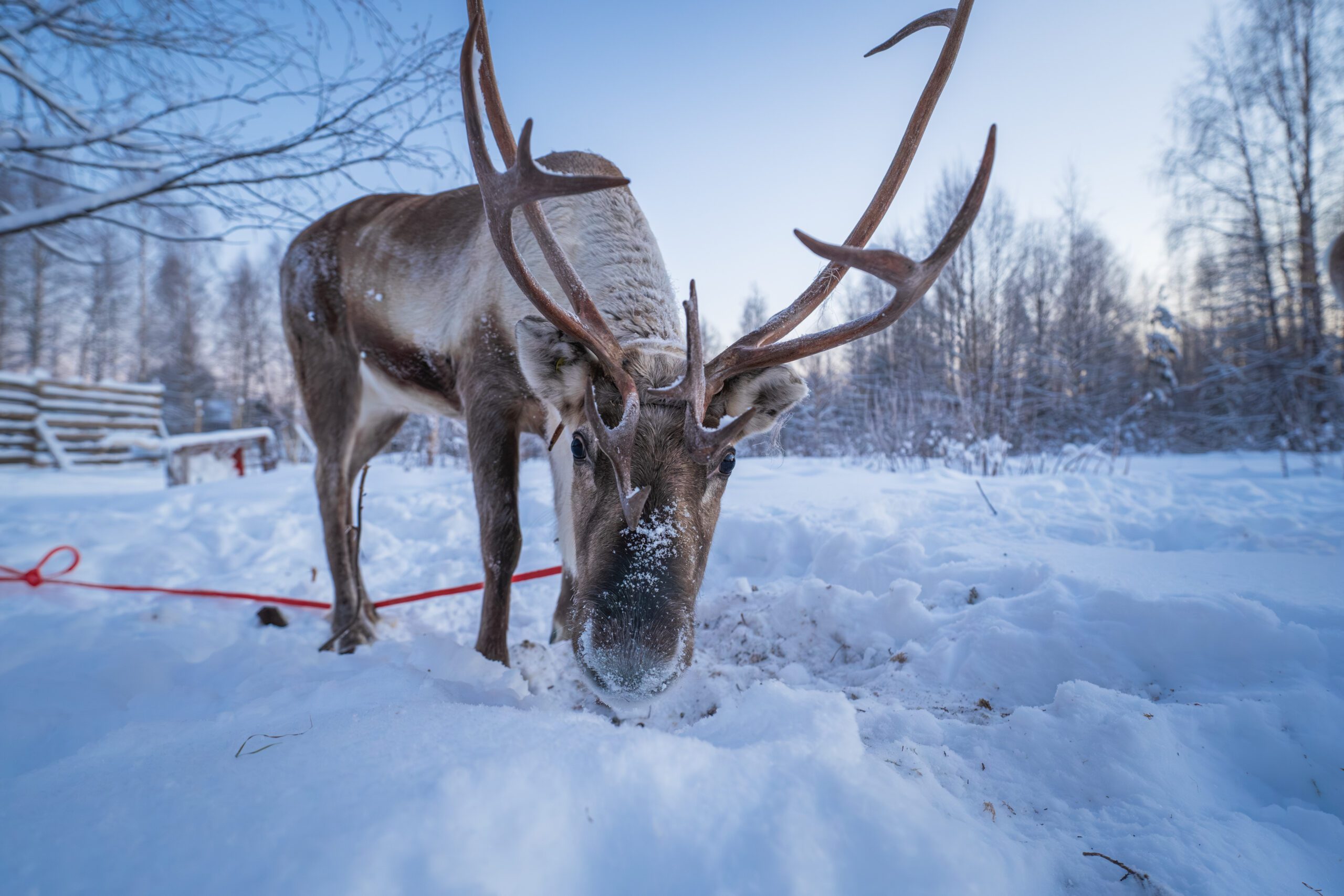
Reindeer herding is the most visible living thread of Sámi culture that visitors in Rovaniemi can meaningfully engage with. In Finland, reindeer herding is legally organised through the Reindeer Herders’ Association (Paliskuntain yhdistys), and while not all Finnish reindeer herders are Sámi, the practice in the northernmost herding districts is deeply connected to Sámi traditions of seasonal migration, animal husbandry, and knowledge of the land.
Reindeer farm visits in the Rovaniemi area give you direct contact with working herds and herders who often explain the seasonal cycle: spring calving, summer grazing on the fells, autumn round-ups, and winter sledding. It’s not a Sámi cultural experience per se — but it’s a genuine encounter with a land use tradition that Sámi communities have shaped and continue to practice in the north.
The key is choosing farms where the animals are well cared for and the guides speak honestly about what the animals mean to local life — not just as a photo prop, but as livelihood. Operators like StayLapland’s reindeer experiences at Kuoksa take care to frame the encounter within that context.
Guided Nature Tours Into Sámi Landscapes
One of the most meaningful ways to connect with the world the Sámi have inhabited for millennia is to go into the landscape itself — the fells, the old-growth forests, the frozen canyons — with a knowledgeable guide who understands what that land means.
StayLapland’s Korouoma Frozen Waterfalls Hike5% off · HUNGRYTRAVELFAMILY5 takes you into the Korouoma nature reserve — a canyon formed by glacial and tectonic forces over thousands of years, and a landscape that has been part of Sámi seasonal movement routes. The 6-hour tour (from €139, difficulty challenging, 3-hour booking cutoff) includes guides, winter clothing, pickup within 10 km, and the kind of immersive time in the forest that lets you stop and actually listen to the silence. Not recommended for children under 3; at least 2 people required on weekdays.
For those wanting to go deeper into the fells, the Riisitunturi Wilderness Adventure5% off · HUNGRYTRAVELFAMILY5 is an 8–9 hour expedition into Riisitunturi National Park, from €245 per person, with snowshoeing, a campfire lunch with Lappish sandwiches, and multiple photography stops. The park is home to old-growth forest, dramatic fell landscapes, and snow-crowned trees that look like something from a landscape that hasn’t changed in centuries. Not recommended for children under 10; at least 2 people required on weekdays.
Both tours are run with small groups, which matters — the difference between a crowd moving through a landscape and a small group actually pausing to notice it is significant.
Sámi Crafts, Language, and Buying Authentic Duodji
Duodji is the traditional Sámi craft tradition — a practice encompassing leather working, textile weaving, bone and antler carving, and silver jewellery. It is not just craft in the decorative sense: duodji was historically the production of practical, necessary items (bags, belts, shoes, knives) made to a standard of quality that could withstand Arctic conditions. What makes something duodji is both the materials used and the knowledge system behind the making.
The Sámi Duodji trademark (a registered mark administered by the Sámi Duodji association) certifies that an item was made by a Sámi artisan using traditional methods. If you want to buy something that genuinely supports Sámi craft culture, look for this mark. You’re unlikely to find Sámi Duodji-certified goods in Rovaniemi airport shops — the place to look is in Inari, online through the Sámi cultural organisations, or at specific craft markets that verify provenance.
On language: Northern Sámi is now taught in schools within the Sámi homeland, and there’s a generation of young Sámi people reclaiming it. You might hear it on YLE Sápmi (the Finnish national broadcaster’s Sámi-language service), encounter it in bilingual road signs north of Rovaniemi, or see it on menus and art installations in Inari. Learning even a handful of words — buorre beaivi (good day), giitu (thank you) — is a small act of acknowledgement that goes a long way.
FAQ: Sámi Culture in Lapland
Is it disrespectful to visit reindeer farms as a tourist?
Not if you choose operators who treat the animals well and present the practice honestly. The problem is when reindeer herding is framed purely as entertainment rather than as a living livelihood. Ask the guide how the reindeer herd operates across the year — if they know and enjoy explaining it, you’re in the right place.
Can I meet Sámi people in Rovaniemi?
Sámi people live and work throughout Finland, including in Rovaniemi — but you shouldn’t expect to identify or approach someone as a cultural representative. The Arktikum museum has Sámi staff and curators; cultural events occasionally bring Sámi speakers and artists to the city. The respectful approach is to engage through formal cultural channels rather than assuming who you’re talking to.
What is the difference between Lappish and Sámi?
“Lappish” (or Lappi in Finnish) refers to the region of Lapland and is a geographic/administrative term. “Sámi” refers specifically to the Indigenous people. The word “Lapp” was historically used as an exonym for the Sámi people and is considered offensive — the Sámi use their own name for themselves.
Are there Sámi cultural events in Finnish Lapland I can attend?
The most significant is Sámi National Day on February 6, marked with events across Sápmi and increasingly visible in Finnish media. The Skábmagovat Indigenous Peoples’ Film Festival in Inari (held in January–February) is internationally recognised. Various Sámi language and culture weeks are organised by municipalities within the homeland throughout the year.
Should I take photos of Sámi cultural items or ceremonies?
Ask first, always. At formal museum exhibits, photography is typically fine. At cultural events or ceremonies, follow the specific instructions given — and if in doubt, put the camera away and simply be present.
Is it possible to do a day trip to Inari from Rovaniemi?
It’s possible but ambitious. The drive is approximately 330 km (about 3.5–4 hours each way), meaning a very long day. A better plan is to stay one or two nights in Inari — it’s a genuinely beautiful part of Finland that most package-tour visitors never reach.
Our Final Word
Sámi culture is not a backdrop for a Lapland holiday — it’s a living, evolving, politically active presence that shapes how this land is managed, understood, and fought over. As visitors, we don’t get to tick it off a list. What we can do is approach it with curiosity, spend money where it genuinely supports the culture, and go beyond the tourist-facing version of Lapland to encounter the place more honestly.
For us, the most meaningful moments haven’t been at staged attractions — they’ve been out in the landscape, in silence, in snow, understanding at a gut level why this place has been home to people for thousands of years. The Korouoma canyon in winter. The Riisitunturi fells above the treeline. The kind of stillness you only find very far north.
If you’re booking activities in Rovaniemi, choose ones that treat the land and the animals with respect, and use code HUNGRYTRAVELFAMILY5 at StayLapland for 5% off your booking. And if Sámi culture is genuinely important to you — go to Inari. It’s worth the extra distance.
Browse our Rovaniemi picks
Tap a category to see every tour. Code HUNGRYTRAVELFAMILY5 gives you 5% off at checkout.
Code HUNGRYTRAVELFAMILY5 works on every StayLapland activity. We work with StayLapland and may earn a small commission — it does not change your price.
Get our best travel tips in your inbox
Monthly stories from Rovaniemi — Arctic tips, packing lists, and the places we keep coming back to.