Driving the E10 to Lofoten: A Complete Road Trip Guide
The E10 through Lofoten is one of the most spectacular roads in the world — a chain of islands linked by bridges, tunnels, and ferry crossings where the Arctic Ocean presses in from both sides. We’ve driven it, loved it, and come back for more. Here’s everything you need to know before you go.
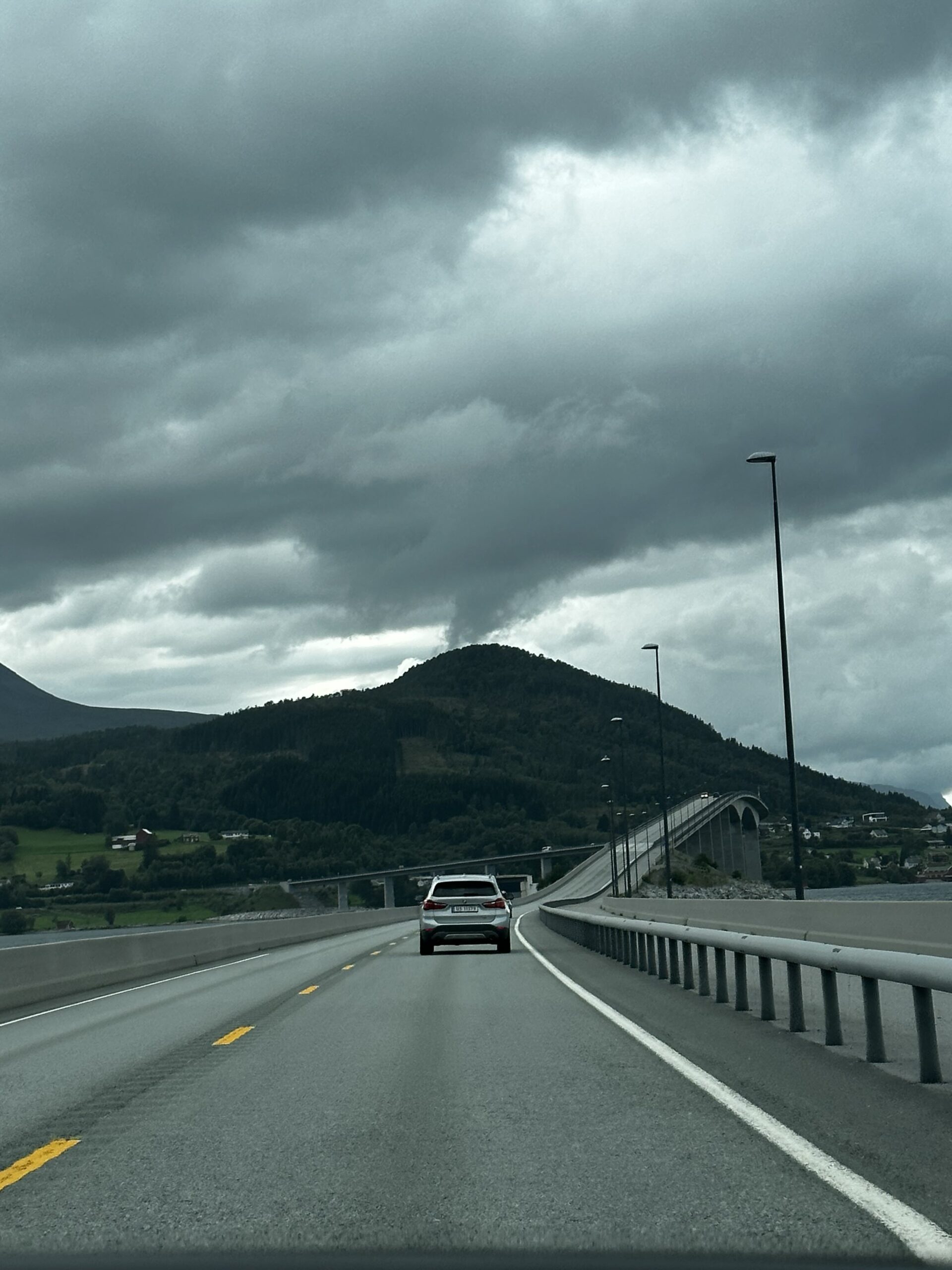
From our home in Rovaniemi, Lofoten is closer than most people realise — a five-hour drive north into Norway via the E8, then southwest along the E6 and finally onto the E10, the road that threads through the Lofoten archipelago like a sentence that keeps finding new ways to surprise you. We’ve driven the Lofoten road trip E10 in June, at the height of midnight sun, and it remains one of the most emotionally affecting drives we’ve done anywhere across 21 countries.
This guide covers the full route from where to join the E10 to where it ends at Å, the stops you cannot skip, and the practical things — fuel, ferries, wild camping, road conditions — that most online guides gloss over. We’ve made the mistakes so you don’t have to.
The E10 Lofoten road trip runs roughly 170 km from Fiskebøl (where the ferry from the mainland arrives) to Å at the southwestern tip — though most people start from Svolvær. The drive takes 3–4 hours non-stop but realistically 2–4 days with stops. Best season: late June to early August for midnight sun and accessible hiking. Fly into Bodø or Evenes (Harstad/Narvik airport) and rent a car, or drive from northern Finland or Sweden via E6.
How to get to the E10 and start your Lofoten road trip
The E10 officially begins at Fiskebøl in the north of Lofoten, where the ferry from Melbu (on the Vesterålen mainland) arrives. But most road trippers treat Svolvær as the practical starting point: it’s the largest town in Lofoten, has the main car rental offices, and is served by both the Bodø ferry and the Evenes airport bus connection.
Getting there: your main options
- Fly to Bodø, take the ferry to Svolvær: the classic approach. Bodø is served from Oslo, Tromsø, and other Norwegian cities. The Bodø–Svolvær ferry (Torghatten Nord) takes about 3.5 hours and is a scenic journey in itself. Book ahead in summer.
- Fly to Evenes (Harstad/Narvik Airport): the airport sits on the mainland roughly 2.5 hours’ drive from Svolvær via E10 and the Lofast tunnel. A good option if you plan to drive north-to-south and onward to Tromsø.
- Drive from Finland or northern Sweden: from Rovaniemi, we take the E8 to Tromsø (approx. 5 hours), then E8/E6 south to Narvik (2 hours), and east along the E10 into Lofoten — roughly 8 hours total. This is genuinely one of the great European road trip approaches: the drive through Arctic Norway before Lofoten even begins is spectacular.
- The Melbu–Fiskebøl ferry (from Vesterålen): if you’re combining Lofoten with Vesterålen (highly recommended), this short ferry crossing drops you right at the northern tip of the E10.
Renting a car in Lofoten
Svolvær has Avis, Hertz, and Europcar desks. Book as far in advance as possible in summer — the rental market in Lofoten is small and prices spike sharply in July. A compact SUV or standard estate gives you the best balance of road clearance and fuel economy. Electric vehicles are available but charging infrastructure, while improving, still has gaps between Svolvær and Å.
The E10 Lofoten route stop by stop
The E10 runs south-west from Fiskebøl through the islands — Austvågøy, Gimsøy, Vestvågøy, Flakstadøy, and Mosken&estr;søy — to the end of the road at Å. Below are the stops we consider non-negotiable, in order from north to south.
Svolvær
The main hub. Stock up on groceries (Rema 1000 has the best prices), fill the tank, and book any accommodation you’ve left to the last minute. The Svolværgeita (the “Goat”) mountain above town is a famous climbing objective, but even from the harbour the twin peaks are striking. The Magic Ice bar and the Norwegian Fishing Village Museum are both worth an hour each.
Henningsvær
Arguably the most photographed village in Lofoten, built on a cluster of tiny islands connected by small bridges. The drive from the E10 is short but the village itself rewards a slow two hours: the football pitch seemingly floating on the water, the harbour full of small boats, the gallery spaces and coffee shops in old warehouses. Go early or late to avoid the worst of the tour groups.
Vestvågøy — Leknes and Unstad Beach
Leknes is the second largest town and a good refuelling stop. More interesting is the detour to Unstad Beach — Lofoten’s best-known surf spot, backed by steep green mountains, with a beach that faces directly into the Atlantic swell. The contrast of tropical-looking waves against Arctic peaks is genuinely surreal in June.
Nusfjord
One of the best-preserved fishing villages in Norway, now a UNESCO-listed World Heritage candidate. The red and ochre rorbuer (traditional fishermen’s cabins) around the harbour haven’t changed shape in a hundred years. Staying overnight here is expensive but exceptional.
Reine
The view from the bridge into Reine — red cabins, mirror-flat water, jagged peaks reflected — is on every Lofoten postcard for good reason. Reinebringen, the hike above the village, gives a panorama that justifies the very steep 45-minute climb. It’s crowded at peak times; go before 8am or after 8pm (both achievable in midnight sun season).
Å (pronounced like the letter “awe”)
The end of the road — literally. The village of Å has a Norwegian Fishing Village Museum and a bakery that makes traditional mølje fish soup from scratch each morning. Standing at the last car park at the tip of Mosken&estr;søya with the Mosken maelstrom in the channel beyond, you feel genuinely far from everything. Which, from Rovaniemi, is saying something.
Related read Combining Lofoten with the broader Norwegian coast? Our guide to Norway’s 18 official scenic routes ranked covers how Lofoten fits into a longer Norway road trip.
E10 Lofoten road trip: distances, times & key logistics
Here’s the quick-reference information we wish someone had given us before our first drive.
- Total E10 length (Fiskebøl to Å): approx. 170 km. Plan on 3.5 hours non-stop; realistically 2–4 days with stops.
- Fiskebøl to Svolvær: 54 km, about 50 minutes. Mostly tunnel through Austvågøya.
- Svolvær to Leknes: 67 km, about 1 hour. The main “spine” of the drive.
- Leknes to Reine: 36 km, about 40 minutes — more if you stop at Nusfjord (allow extra 30 min detour).
- Reine to Å: 11 km, about 20 minutes. Short but slow — narrow road and endless photo stops.
- Fuel: fill up in Svolvær and Leknes. Stations between these points exist but are small. Don’t rely on finding diesel between Leknes and Å.
- Ferries: no ferries are needed to drive the E10 end-to-end — all islands are now connected by bridges or the Lofast tunnel. The Melbu–Fiskebøl ferry is only needed if you come from Vesterålen.
- Tolls: Lofoten itself is toll-free on the E10. The Lofast road from Narvik direction is free. Toll roads exist in the approach from the mainland but fees are small.
- Speed limits: 80 km/h on the main E10 sections; 60–70 km/h through villages and narrow sections. Strictly enforced by speed cameras.
- Wild camping: Norway’s Allemannsretten (Everyman’s Right) allows camping on uncultivated land more than 150 metres from the nearest house. Lofoten enforces this more strictly than the mainland in some areas — designated camping spots are widely available and the best ones book up fast.
Road trip notes from the Arctic
New routes, honest costs, what we got wrong — straight to your inbox from Finnish Lapland.
Where to stay along the E10 Lofoten road trip
Lofoten accommodation is some of the most atmospheric in the world and some of the most over-priced in peak season. Here’s how we approach it.
Accommodation tips
- Rorbuer (fishermen’s cabins): the iconic Lofoten experience. Self-contained waterfront cabins, historically used by fishermen during the skreifiske (cod season). Book 3–6 months ahead for July. Nusfjord, Sakrisøy, and Å have the most atmospheric clusters.
- Campings: Lofoten has several excellent campgrounds — Sandsletta in Ballstad, Ramberg Gjestegard on the white sand beach at Ramberg, and Moskenes Camping near Å are all well-managed and often cheaper than the cheapest hostel dorm in Oslo. Arrive by 4pm in July to secure a pitch.
- Wild camping: possible but increasingly regulated. Some beach spots that used to allow free camping now ask campers to use designated areas. The Lofoten municipality website has a map of where wild camping is and isn’t permitted.
- Svolvær hotels: if you want a hotel base and plan to day-trip the islands, Svolvær has Scandic and Thon properties. Practical, not atmospheric, but reliable.
- Book everything in July: we cannot overstate this. A friend booked a Lofoten rorbu for four people in mid-July with three weeks’ notice and paid €480 per night for something that costs €180 in June. June is better value, equally beautiful, and the midnight sun is at its peak.
The E10 Lofoten road trip by type of traveller
The E10 is not a one-size-fits-all experience. Here’s how different travellers get the most from it.
- Photographers: stay 4–5 nights and base yourself in Reine. The light between midnight and 3am in late June is extraordinary — the sun skims the horizon and the peaks catch gold and pink simultaneously. Set your alarm for 1am.
- Hikers: the E10 is surrounded by excellent hiking. Reinebringen above Reine (approx. 2 hours round trip), Ryten above Kvalvika beach (4 hours, the beach at the bottom is reward enough), and Festvågåkopf on Austvågøya are the three best accessible trails.
- Families with kids: Henningsvær and the Norwegian Fishing Village Museum at Å are excellent family stops. The ferry from Bodø is an adventure for children. Rorbuer with a kitchen are much more practical than hotels with young children — you can cook, have space, and be near water without worrying about restaurant mealtimes.
- Budget travellers: camping is genuinely feasible and beautiful. Cook from Rema 1000 in Svolvær or Leknes. The E10 itself is free. The biggest unavoidable cost is getting there — Bodø flights from Oslo can be reasonable with advance booking on Norwegian or SAS.
- Drivers coming from Finland/Sweden: the approach via E8 and E6 from Rovaniemi is one of our favourite long drives. Break it at Tromsø (a fantastic city in its own right, well worth an extra day), then continue south to Narvik and across into Lofoten. The total trip from Rovaniemi works beautifully as a 7–10 day circuit.
- Short-visit road trippers (2 days): fly to Evenes, drive Svolvær–Henningsvær–Reine–Å in one day, stay overnight in Reine, hike Reinebringen at midnight, drive back. Ruthless but doable. You’ll still come home changed.
Related read Not sure whether to rent a car in Norway at all? Our honest guide on renting a car in Norway covers costs, toll roads, ferry bookings, and how to navigate Norway’s mountain passes.
Mistakes we made on the Lofoten E10 road trip
- Arriving without accommodation booked in July. We drove in mid-July on our second visit thinking “it’ll be fine, it’s Norway.” Every rorbu between Svolvær and Å was sold out. We ended up paying a fortune for the last room in a Leknes hotel. Book months ahead for July.
- Rushing Henningsvær. On our first trip, we gave it 45 minutes. We have regretted this ever since. Henningsvær is one of those places that rewards wandering — through the alleys, across the little bridges, into the small galleries. Give it two to three hours minimum.
- Missing the turn-off for Nusfjord. The road down into Nusfjord is a small junction on the E10 with a modest sign. We drove past it and didn’t realise for 12 km. Set a specific GPS waypoint (68.3254° N, 13.9201° E) rather than searching “Nusfjord” — some mapping apps route you on a longer inland track.
- Underestimating the Reinebringen hike time. We started at 10pm planning a “quick” evening hike. The wooden staircase section is steep and uneven. It took 90 minutes up and 70 minutes down — not the breezy 45 minutes the internet suggested. Bring trekking poles if you have them and wear proper footwear.
- Not refuelling before Reine. There’s no petrol station between Leknes and the very end of the road. We coasted into Å with the warning light on. Fill up in Leknes.
- Driving at peak afternoon in midsummer. The light in Lofoten at 2pm in July is flat and harsh. The extraordinary photography light is between 10pm and 4am. Adjust your schedule accordingly — sleep from 5am to 1pm, drive and hike through the night. It sounds strange until you try it.
Frequently asked questions about the Lofoten E10 road trip
How long is the E10 road through Lofoten?
The E10 through Lofoten runs approximately 170 km from Fiskebøl (where the ferry from Vesterålen arrives) to Å at the southwestern tip of Mosken&estr;søya. Driving non-stop takes around 3–3.5 hours, but most people take 2–4 days to do the route properly with stops at Svolvær, Henningsvær, Reine, and the smaller villages between.
Is the Lofoten road trip doable without a car?
Technically yes, but it’s difficult. There is a bus service (Nordland Ekspressbuss) that runs along the E10, and cycling is a popular option for those with time. Hitchhiking is reasonably viable in summer. However, to see the smaller villages (Nusfjord, Sakrisøy, Unstad Beach), you really need a car — bus stops and timings don’t cover these detours. For most visitors, renting a car in Svolvær is the right call.
When is the best time to drive the Lofoten E10?
Late June to early August is peak season for a reason: the midnight sun, accessible hiking trails, and the fishing village atmosphere at its most alive. Late June is our personal recommendation — slightly fewer visitors than July, the midnight sun is at maximum, and prices are lower. May has dramatic snow on the peaks and almost no crowds, but some hiking trails above 500 metres are still dangerous. September brings autumn colours and very few tourists but shorter days.
Do you need ferries to drive the full E10 through Lofoten?
No — since the completion of the Lofast tunnel (E10) connecting Lofoten to the mainland near Narvik, and the bridges linking the main islands, you can drive the entire E10 from the mainland to Å without any ferry. The only ferry involved is if you arrive by boat from Bodø to Svolvær, or take the short Melbu–Fiskebøl crossing from Vesterålen, but these are access routes, not part of the E10 itself.
Can you drive to Lofoten from Finland?
Yes, and it’s one of our favourite approaches. From Rovaniemi, head northwest on the E8 to Tromsø (approx. 5 hours), then south on the E8/E6 to Narvik (2 hours), and then west onto the E10 into Lofoten (approx. 1.5 hours to Svolvær). Total drive time from Rovaniemi to Svolvær is roughly 8.5–9 hours — very doable as an overnighter in Tromsø then a morning drive into the islands.
Is Lofoten expensive for a road trip?
Lofoten is expensive by most European standards — Norway generally is. The biggest costs are accommodation (rorbuer start at around €150/night in June, rising to €300+ in July) and eating out (a main course in a restaurant runs €25–40). You can significantly reduce costs by camping (€20–35/night) and self-catering from the Rema 1000 supermarkets in Svolvær and Leknes. The road itself, including the E10, is toll-free. A budget of €100 per person per day camping and cooking covers the trip comfortably.
A final word from Rovaniemi
There are roads you drive and forget, and roads that stay with you. The E10 through Lofoten is the second kind. We’ve done it twice now and both times arrived at Å feeling the specific kind of quiet that comes from being genuinely somewhere — not just passing through. The combination of dramatic Arctic landscape, intact fishing culture, and the disorienting beauty of the midnight sun makes Lofoten unlike anywhere else we’ve driven in 21 countries.
From Rovaniemi, it’s close enough to feel like a long weekend, far enough to feel like a real journey. If you’re driving the E8 toward Tromsø and wondering whether to continue south to Lofoten — continue. You won’t regret it. Just book your rorbu first.
Joona & Alla
A Finnish-Ukrainian couple living in Rovaniemi, Finland. Joona is a marketing professional in Lapland tourism; Alla is an AI Engineer. Together we’ve visited 21 countries and share honest, locally-grounded travel writing from our home in the Arctic.
Read our full story →